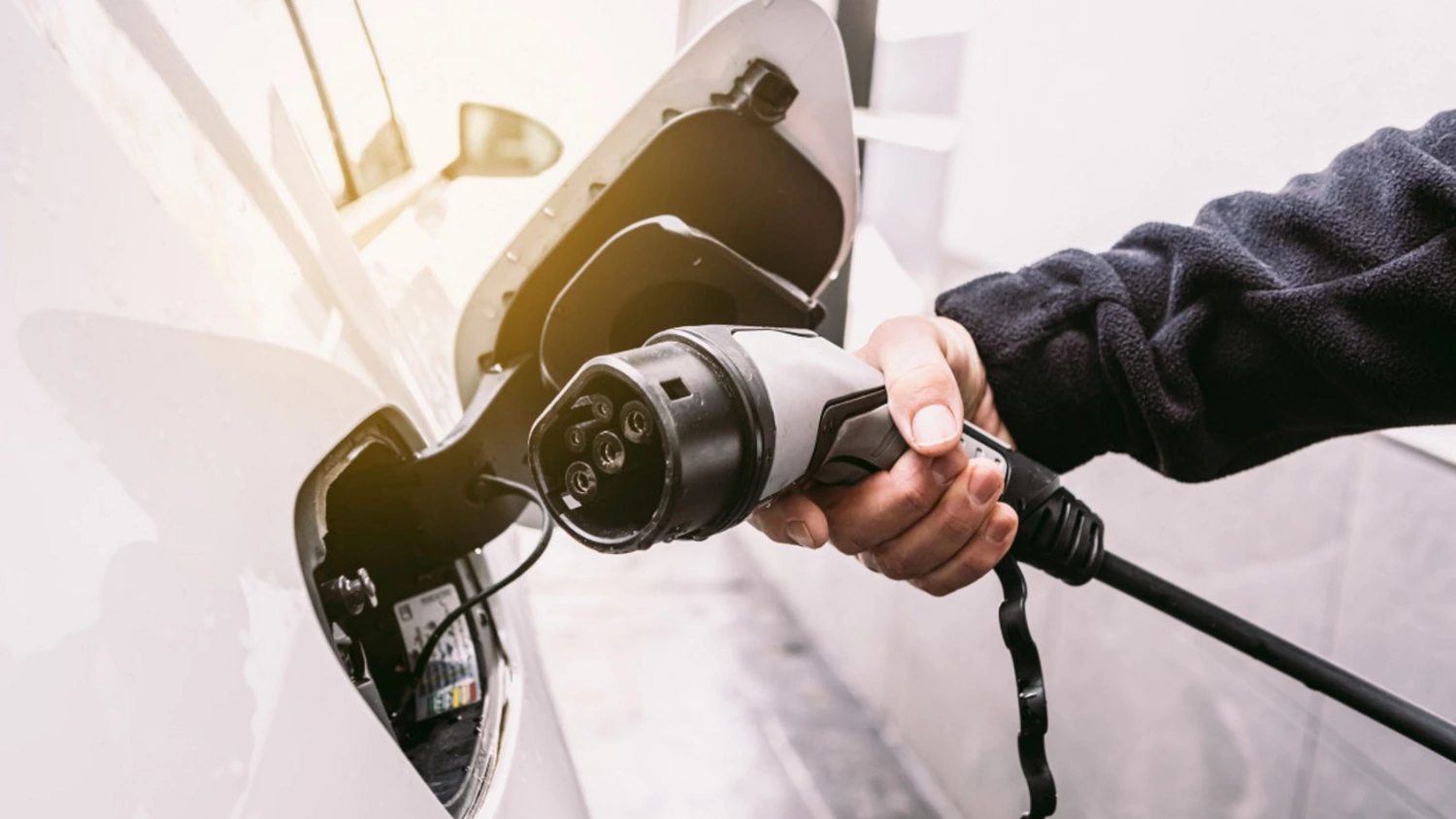
EU sees 1.5 million new battery-only electric cars in 2023
In 2023, 1.5 million new battery-only electric passenger cars were registered in the EU, raising the total to 4.5 million.
EBRD will lend €20 million to European charge point operator Allego to finance the construction of EV charging stations in Poland.
The EU and the Republic of Serbia have signed a Memorandum of Understanding (MoU) launching a Strategic Partnership on sustainable raw materials.
European Union initiatives will make traveling by train in Europe more sustainable.
The European Commission has selected 134 transport projects to receive over €7 billion in EU grants from the Connecting Europe Facility (CEF).
The European Commission has imposed provisional countervailing duties on imports of battery electric vehicles (BEVs) from China.
The European Commission has launched the Climate City Capital Hub, a finance resource to support cities participating in the EU Mission on Climate-Neutral and Smart Cities.
Battery-electric buses reached 36% of new city bus sales in 2023 in the EU, overtaking diesel as the main bus fuel type for the first time.
Average CO2 emissions from all new cars registered in Europe in 2023 continued to decrease and were 1.4% lower than in 2022.
North America has signifincatly outplaced Europe in attracting investments in electric vehicle (EV) production battery production and charging infrastructure.
Ford has started mass production of the new all-electric Ford Explorer at its first dedicated electric vehicle (EV) facility in Europe.
The US and Europe will face slowing demand and sales for electric vehicles (EVs) in the near term, while China is set to see steady growth.
OMV Petrom closed the acquisition of Renovatio Asset Management, owner of the largest charging network for electric vehicles in Romania.
DHL has launched Continental Europe's first Electric Vehicle (EV) Center of Excellence in Pozzuolo Martesana, near Milan.
Engie Romania and Ford Romania Services have established a national strategic partnership to encourage the use of electric vehicles and promote electric mobility.
EBRD provided a €10 million loan for the acquisition of cutting-edge trams, aligning with Sarajevo's vision for a greener public transit system.
The European Commission initiated a third call for proposals totaling €90 million under the European Urban Initiative.
The European Union will require widespread adoption of electric vehicles across its member states to meet ambitious CO2 emission reduction targets.
EBRD has extended a €108.3 million loan to Olympic Commercial and Tourist Enterprises SA (Avis Greece) to facilitate the electrification of its car fleet.
The Green Revolution Association, in partnership with Raiffeisen Bank Romania and Mastercard, proposes an innovative solution to the sustainability infrastructure issue.
Romania faces a shortage of charging stations, but increasing EV adoption highlights growing demand.
Kaufland Romania has launched a project through which Kaufland Card owners with electric cars have the possibility to charge their vehicles at one of the charging stations.
Renault Group CEO, Luca de Meo, urges EU nations to collaborate to address competition disparities with China and the U.S. and safeguard the bloc's automotive industry.
Its objective is to support the automotive industry in the sustainable use of resources by harnessing the existing expertise of the Group.

The European Union has reached a provisional agreement to reduce the scope and stringency of two major ESG regulatory frameworks: Corporate Sustainability Reporting Directive (CSRD) and Corporate Sustainability Due Diligence Directive (CSDDD).
Waldevar Energy has begun construction on two utility-scale photovoltaic parks for Doral Energy in Tudor Vladimirescu (Brăila County) and Ștefan Vodă (Călărași County), Romania. The projects will deliver 14 MWp of installed capacity using around 25,000 photovoltaic panels.
Lidl Romania has published its eighth sustainability report for the 2024 financial year, announcing accelerated progress in reducing environmental impact. The retailer has achieved its international 2030 target for transitioning to natural refrigerants, with these now used in 100% of logistics centres and 81.7% of stores, compared to the original goal of 100% of logistics centres and 40% of stores. The company has also increased its green energy usage to 80% of total consumption.
Global law firm Dentons has advised OX2 on acquiring three wind power projects totaling 235 MW in Romania from Future Power. The projects, located in Vaslui and Vrancea counties, are expected to be commissioned between 2028 and 2030, subject to permitting.
Romania is emerging as a key destination for Turkish renewable energy investments, attracting growing interest from industrial and financial groups. Real grid connection opportunities for projects, infrastructure modernisation potential, and investment framework stability make Romania strategic for Turkish capital as Europe accelerates its transition to sustainable sources and energy independence.