
The buildings that survive the next decade won't be the greenest - They'll be the ones that can prove it

Green Forum
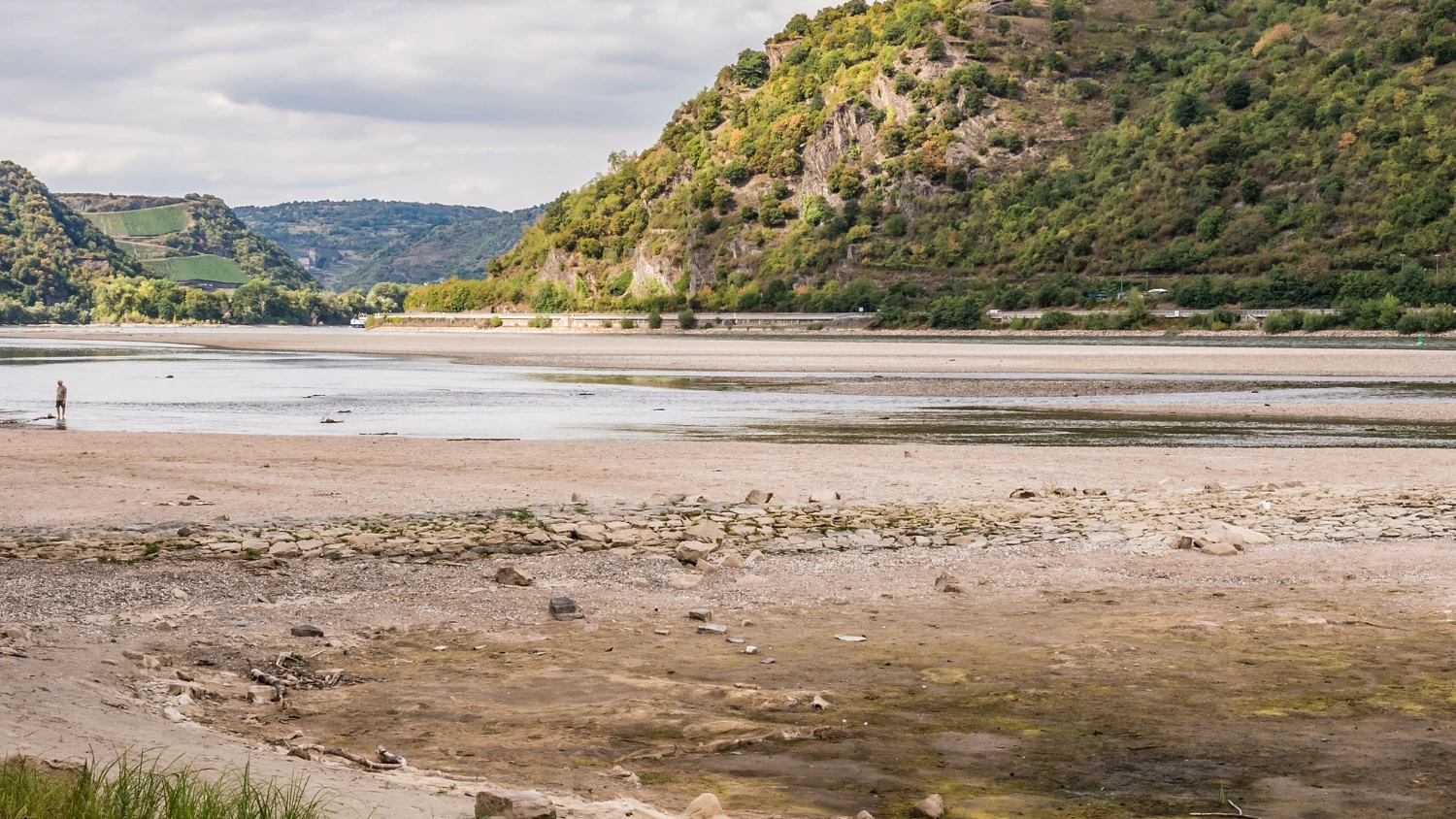
This summer told a story that no risk model wanted to write. Rivers ran too low to cool the plants beside them. Cities logged heat records that used to be once-in-a-generation events. Wildfires reached suburbs that had never planned for them, while, weeks later, the same regions were flooded by storms violent enough to shatter roofs with hail the size of golf balls. For the real estate sector, this was not weather. It was a live stress test of every portfolio, every loan book, and every insurance policy tied to a physical address.

The uncomfortable truth is that most of the industry failed that test not because it lacked ambition, but because it lacked answers. Ask a fund manager, a lender, or an insurer a simple question after a heatwave or a flood — what is this building's actual exposure, and what has been done about it — and the honest response, in far too many cases, is silence, or a spreadsheet nobody trusts.

That gap is what a new partnership between NTrust and Heartprint sets out to close. NTrust, a global provider of AI-powered real estate data services operating across more than 100 countries, and Heartprint, a Munich-based sustainability and digital transformation consultancy, have joined forces around a deceptively simple idea: real estate does not have a data shortage. It has a translation shortage.

"The data we needed to answer those questions after this year's fires and floods already existed," says Rainer Karcher, CEO of Heartprint. "It was sitting in lease documents, energy bills, building certificates, and maintenance logs — just scattered across ten different systems and three different departments, in formats nobody had reconciled since the last audit. That's not a sustainability problem. That's a plumbing problem. And it's exactly the kind of problem you can solve without inventing a single new piece of software."

That distinction matters more than it might first appear. The last decade of PropTech has produced an abundance of dashboards, portals, and platforms promising to make sustainability visible. What this year's climate extremes exposed is something upstream of any dashboard: if the underlying data about a building — its floor area, its energy systems, its certifications, its actual consumption, its climate exposure — is incomplete or inconsistent, no interface will fix that. The partnership's starting premise is that the highest-value work now is not building the next front end, but getting the foundational data right, structured, and trustworthy enough for a bank, an insurer, or an investment committee to act on it without a fire drill.

This is where the two companies' capabilities meet. NTrust brings AI-driven extraction and processing at scale — pulling structured, verifiable data out of the lease documents, compliance certificates, and operational records that most portfolios still hold in unstructured form. Heartprint brings the regulatory and strategic layer: translating that data into the frameworks now shaping capital flows across the sector, from the EU's Corporate Sustainability Reporting Directive to the Sustainable Finance Disclosure Regulation's Article 8 and 9 fund classifications.

"What we're combining isn't two products, it's two disciplines that the market has kept artificially separate," says Martin Betts, VP Real Estate Services EMEA at NTrust. "Data infrastructure without strategy just produces more numbers nobody acts on. Strategy without reliable data is a slide deck. Put them together, and you get something a credit committee or an underwriter can actually rely on when the next heatwave, drought, or storm puts a portfolio back under scrutiny."

That reliability is becoming a financial variable in its own right. Lenders are increasingly structuring loan terms and covenants around a borrower's sustainability trajectory; insurers are repricing risk on physical exposure that used to be treated as background noise. In both cases, the organisations able to produce complete, consistent, audit-ready information — not glossy reports, but answerable data — are starting to secure better terms than those still reconstructing figures under deadline pressure.

Neither NTrust nor Heartprint frame this as an environmental crusade. Their shared argument is more pragmatic: as climate volatility becomes a permanent feature of operating a building rather than an occasional disruption, resilience stops being a virtue and becomes a basic requirement of the business model — the difference between being financeable and being uninsurable, between closing a deal and having it stall in due diligence. Call it sustainability, or call it, as Heartprint prefers, future-readiness: the ability to answer hard questions about any asset, on any given Tuesday, without scrambling first.

RECOMMENDED
7R Group releases 2025 Sustainability Report
Real estate

7R Group releases 2025 Sustainability Report

7R Group has published its 2025 Sustainability Report, prepared in accordance with the Corporate Sustainability Reporting Directive (CSRD), the simplified European Sustainability Reporting Standards (ESRS) and the EU Taxonomy. The report is the company's third, published voluntarily despite the absence of a formal reporting obligation in 2025. 7R is a commercial real estate developer active in Poland, the Czech Republic and Germany, with a delivered portfolio exceeding 2 million sqm and a further 3.9 million sqm at various stages of preparation.

PwC signs 20,000 sqm deal at AFI Tower in Warsaw
Real estate

PwC signs 20,000 sqm deal at AFI Tower in Warsaw

AFI and Echo Investment have signed a lease for approximately 20,000 sqm across 11 floors of AFI Tower in Warsaw with PwC Polska, described as the largest office leasing transaction in Poland so far this year. PwC will become the anchor tenant of the 150-metre, 40-storey tower and plans to relocate its Warsaw office there in early 2029. The building is the tallest element of the Towarowa22 mixed-use development, which is being delivered by AFI, Echo Investment and Archicom and combines office, residential, retail and leisure uses.

How can cities fight water scarcity and drought?
Real estate

How can cities fight water scarcity and drought?

Water scarcity is no longer limited to historically dry regions of Southern Europe. According to the European Drought Observatory, drought conditions intensified across France, Germany, Austria, Hungary, Romania and the United Kingdom in June 2026. Low water levels in German rivers are affecting shipping and industry, while England's 2025 drought led to water restrictions for millions of people and historically low reservoir levels.

Future-ready your industry. With light.
Real estate

Future-ready your industry. With light.

The modern industrial and logistics sectors in Central and Eastern Europe are navigating a highly complex macroeconomic environment. Globally, industry consumes 24% of total energy1, and in an era of volatile utility prices, energy efficiency has shifted from a corporate social responsibility initiative to an operational imperative. Simultaneously, facility and plant managers grapple with continuous operational risks. Industry data reveals that the average manufacturing plant loses between 5% and 20% of its annual productivity to unplanned downtime2 – an issue that 90% of manufacturers rank as their top operational threat. Faced with persistent skilled labour shortages and an ageing workforce, industrial operators must fundamentally rethink their infrastructure strategy to secure long-term competitiveness.

BRD grants sustainable financing of €220 million in 2022
Business

BRD grants sustainable financing of €220 million in 2022

BRD – Groupe Société Générale granted sustainable financing of RON1.1 billion (€220 million) last year. BRD launched 2022 its first green lending products for individuals. Also, the BRD Group reduced its energy consumption by 12.5% compared to the previous year and the greenhouse gas emissions resulting from operations.

Romania should have a body to regulate the ESG field
Regulation

Romania should have a body to regulate the ESG field

Romania should have a body that regulates the ESG field (environment, social, and governance), and the ministries should prepare sustainability reports, says Călin Ionescu, CEO of Sphera Franchise Group. Although there is an obligation to publish the ESG report for all companies with over 500 employees, apart from multinationals, most do not publish it because there is no sanction.

RECOMMENDED FROM THE HOME PAGE
Energy

Solar module makers show first financial stability in over a year

The newly published Edition 2 2026 of the PV Module Manufacturer Ranking Report shows the first signs of stabilisation in the solar manufacturing sector's balance sheets after more than a year of steady deterioration. The table tracks the Altman Z-Score, a widely used measure of bankruptcy risk, for 64 publicly listed photovoltaic module manufacturers, and has now been refreshed with first-quarter 2026 data.

Energy

Romanian floating solar pioneer partners with university

The Faculty of Hydrotechnics from the Technical University of Civil Engineering Bucharest and Waldevar Floating PV have signed a strategic partnership to accelerate innovation in renewable energy and prepare the next generation of specialists in floating photovoltaic technologies.

Energy

Rezolv Energy launches Bulgaria's St. George solar park

Rezolv Energy has commissioned the St. George solar park in Silistra, Bulgaria, marking the company's first project to become operational. The 225 MW facility reached full operational status in under three years from acquisition of development rights.