Investment company Evergent Investments, based in Bacău County, identifies a "growing demand for organic products" and is now investing in organic blueberry production. The company announces that it continues the development of the Private Equity portfolio, increasing the area of the "Blueberry Farms" project to 105 ha, through the purchase of 50 ha through the company Ever Agribio. The new land is intended for the production of organic blueberries, which meets the growing demand for organic products.
OMV Petrom, the largest integrated energy company in Southeast Europe, announces the signing of a financing contract through the National Plan for Recovery and Resilience for the construction of a hydrogen production capacity by water electrolysis at the Petrobrazi refinery. The contract was signed with the Ministry of Energy, for a maximum value of about €39 million, the total investment being estimated at about €74 million.
Drobeta Turnu Severin Emergency County Hospital becomes energy efficient, by installing monocrystalline photovoltaic panels. The Mehedinți County Council announces that an important part of the modernization and energy efficiency project of the hospital's main building is the thermal efficiency of the building together with alternative energy sources that will ensure both patient comfort and lower costs for the maintenance of the medical unit.
This week, the first ecology camp organized as part of the "Cleaning Month in Bihor County" campaign was held, run by the Bihor County Council and Ecolect Group Bihor. This day camp aimed to educate young people about the importance of protecting the environment and ecology, developing sustainable entrepreneurial skills, but also raising awareness of the existence of digital applications that support the community in order to protect the environment, such as Bihor Curat and Forest Inspector.
2,544 ancient beech trees from Nucșoara can be adopted in the "Forest of Immortal Stories". The new project is an initiative of the Commune of Nucșoara in Argeș County, carried out with the support of the Conservation Carpathia team and aims to protect some of the most spectacular ancient beech trees in Europe and to contribute to the tourism development of the area. Anyone can adopt a secular beech tree for RON700 (€140), choosing it from a map of the site or searching by a preferred number.
Romania requests, through the RePowerEU mechanism, substantial European funds for subsidizing the installation of photovoltaic panels for natural persons. It is about €400 million, the amount that could be included in some kind of complementary program to the program of the Environmental Fund Administration for the installation of photovoltaic panels on residential homes.
Romania should have a body that regulates the ESG field (environment, social, and governance), and the ministries should prepare sustainability reports, says Călin Ionescu, CEO of Sphera Franchise Group. Although there is an obligation to publish the ESG report for all companies with over 500 employees, apart from multinationals, most do not publish it because there is no sanction.
A photovoltaic park with an installed power greater than that of a Cernavodă nuclear reactor will be built in Romania, which reflects the appetite of investors to become players in this market again. George-Sergiu Niculescu, president of the National Energy Regulatory Authority (ANRE), says that when he arrived at ANRE's management, he saw a request for authorization to establish a photovoltaic park of approximately 1,050 MW.
The inspectors from the Romanian Water Administration issued fines of almost €100,000 following checks made at the ballast stations, finding that in some cases the operators were illegally exploiting tens of hectares of land. In these cases, the institutions with attributions in the field will also be notified. Controls were organized in the Argeș-Vedea, Banat, and Mureș hydrographic basins, discovering irregularities in 12 companies with profile activity.
7 out of 10 Romanians who install photovoltaic systems are from urban areas. Also, RON35,000 (€7,000) is the average value of the projects implemented and in the process of implementation, shows a study by the company Ensys, a supplier of turnkey photovoltaic systems in Romania. It shows that the amortization period of a photovoltaic system is 2-7 years. The study shows that 7 out of 10 Romanians who install photovoltaic systems are from the urban environment, and 8 out of 10 customers who install photovoltaic systems are men.
In 2022, BCR granted funding of approximately €2.5 million for the development of associations and social enterprises, supporting the creation of approximately 1,800 jobs. More than 67,000 children and adults learned to build a better relationship with money through financial education workshops organized by BCR volunteers and partner associations. More than 160 NGOs were supported to develop impact programs in local communities.
Romania must invest in the rehabilitation of buildings and heating systems to reduce energy poverty, through REPowerEU, according to the Romanian Energy Poverty Observatory (ORSE) experts. The essence of the REPowerEU investments and reforms package is to reduce energy poverty and the effects of the crisis at the level of the European Union. Measures such as improving the insulation of buildings inhabited by vulnerable consumers and replacing their heating and cooling systems with modern types of equipment are the most effective way to tackle energy poverty.
An online platform calculates your personal carbon footprint over the course of a year in terms of transport, waste, and energy consumption. The calculator is available on the economiecirculara.eu platform has algorithms that are based on international standards and measurements and measure the carbon footprint within a year.
The potential of the green energy market (solar panels, heat pumps, insulation) is estimated at over €30 billion by the year 2040. The consulting company McKinsey & Company Romania shows that Romania's transition to green energy represents a financing opportunity for banks of €20 billion.
Ford presents the E Tourneo Courier, a fully electric model, which will be produced in the Ford Otosan factory in Craiova. The E-Tourneo Courier will be available from the end of 2024. The car will have five seats.
The Sustainability Academy was launched, the first social and educational platform dedicated to SMEs in Romania, with free access. The Sustainability Academy is a Sustainable Futures brand project initiated by Social Innovation Solutions together with the Coca-Cola Foundation, founding partner, and BCR, main partner. The Sustainability Academy aims to help SMEs willing to adopt sustainability strategies and aims to increase the number of sustainable businesses in Romania.
BCR gas entered the international market with the first issue of green Eurobonds, worth €700 million. The funds will be directed toward renewable energy projects, green mortgages, and green buildings.
Nokian Tyres has started construction work on its new tyre factory in Romania, the first unit with zero CO2 emissions in the tyre industry. The total value of the Oradea investment is estimated at approximately €650 million, which makes it one of the largest investments in Romania in recent years. The factory will employ 500 people.
Romanians who want photovoltaic panels can apply for the Casa Verde Photovoltaic Program, starting on May 19. The application submission period for natural persons is May 19 - June 26. The total budget allocated to the program is RON2 billion (€400 million) and the subsidy is a maximum of RON20,000 (€4,000); on the other hand, the beneficiaries must contribute at least RON2,000 (€400).
Alpla inaugurates a PET recycling unit in Târgu Mureș, an investment of €7.5 million. The plastic recycled at the factory in Târgu Mureș will be used for the production of new PET bottles. Alpla has 190 production units in 46 countries.
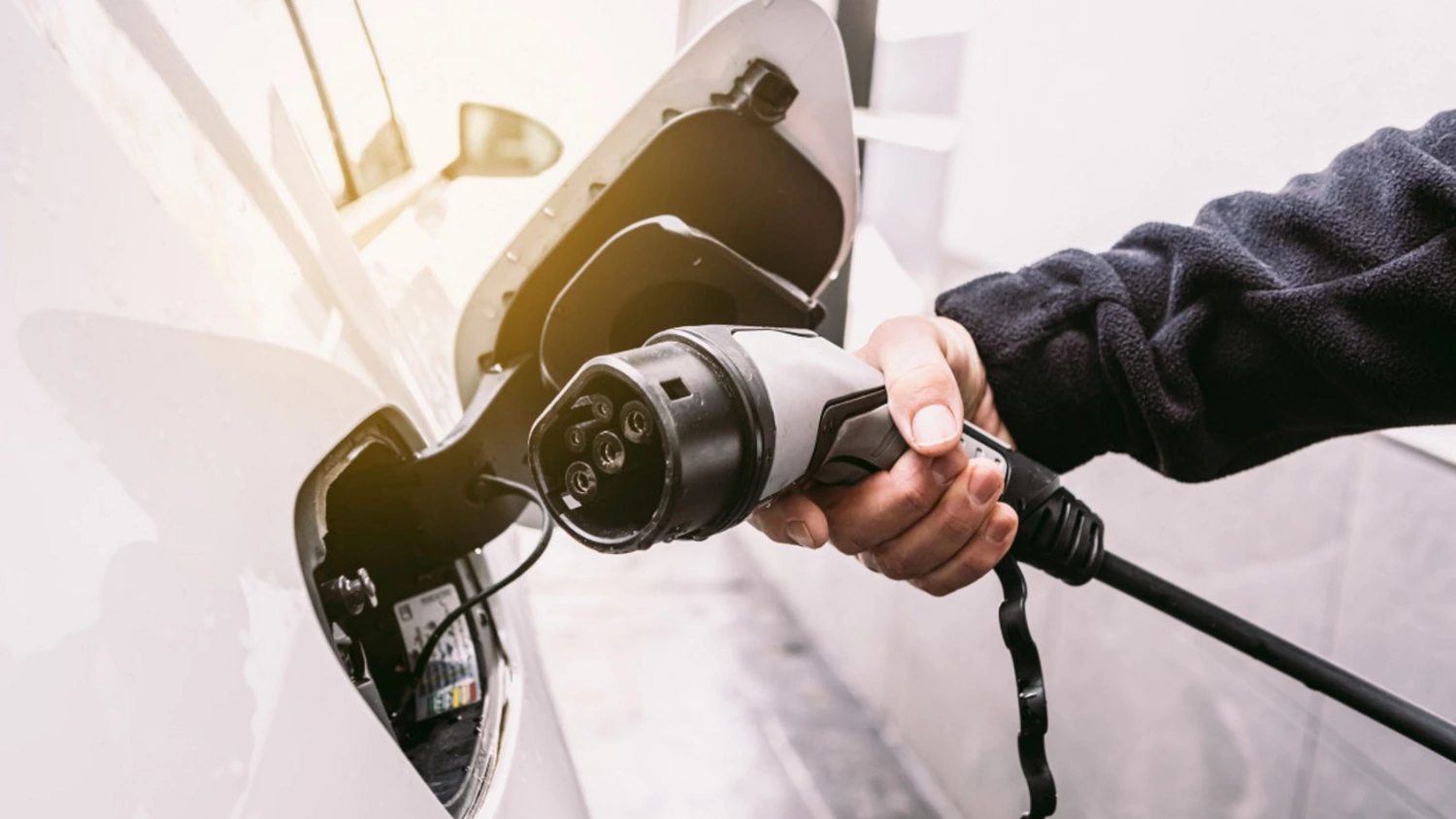
The European Bank for Reconstruction and Development is providing €35 million to GreenWay as part of a €113 million financing package to expand electric vehicle charging infrastructure across Central Europe.
The newly published Edition 2 2026 of the PV Module Manufacturer Ranking Report shows the first signs of stabilisation in the solar manufacturing sector's balance sheets after more than a year of steady deterioration. The table tracks the Altman Z-Score, a widely used measure of bankruptcy risk, for 64 publicly listed photovoltaic module manufacturers, and has now been refreshed with first-quarter 2026 data.
The Faculty of Hydrotechnics from the Technical University of Civil Engineering Bucharest and Waldevar Floating PV have signed a strategic partnership to accelerate innovation in renewable energy and prepare the next generation of specialists in floating photovoltaic technologies.
Rezolv Energy has commissioned the St. George solar park in Silistra, Bulgaria, marking the company's first project to become operational. The 225 MW facility reached full operational status in under three years from acquisition of development rights.