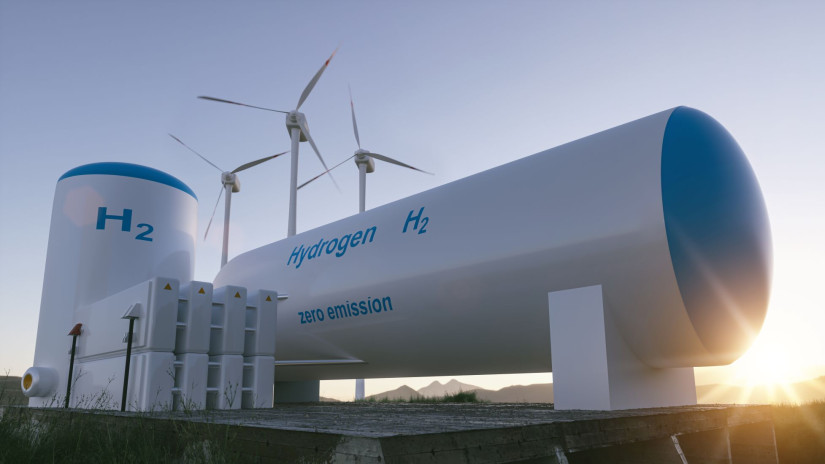


The German government's national hydrogen strategy goal is to have at least 10 gigawatts of installed electrolysis capacity in Germany by 2030.
In terms of H2 infrastructure, the number of 100% hydrogen pipelines in operation in Germany remained almost unchanged. There is a clear positive development regarding the plans for a hydrogen network, the planned length of which has almost doubled.
Currently, 5,708 kilometers of hydrogen pipelines are planned to be built by 2035, compared to only 2,813 kilometers that were announced in February this year. E.ON attributes this to the fact that, with the decision to create a central hydrogen network, the construction of related infrastructure has gained momentum in recent months.
For E.ON, this is another indication that the existence of clear policy and regulatory frameworks directly accelerates the development of the hydrogen-based economy. However, in many areas, they are not currently sufficient to limit the existing technology, demand, and infrastructure risks, nor to make green hydrogen production costs competitive in particular. For this reason, E.ON asked the consulting firm Frontier Economics to analyze various options for accelerating the development of hydrogen in Germany.
"Acceleration is something we urgently need in terms of hydrogen development in Germany. The discrepancy between planned projects and final investment decisions is far too great. We need tools to further accelerate the development of hydrogen use. That's why we at E.ON initiated a study that identifies various options. In this way, we want to provide a concrete impetus and support political decision-makers in creating the necessary framework conditions for the success of the hydrogen-based economy", says Patrick Lammers, a member of the Board of Directors of E.ON.
The new study focuses on five different tools. As the green gas quota is an increasingly common topic on the political agenda, and as the EU already imposes hydrogen quotas in industry and in the transport sector that must be respected in the member states, Frontier Economics has analyzed this instrument in detail. An argument in favor of a green gas quota is that it can be implemented without the use of direct public funds and allows for the planned growth of green gases safely. A green gas quota would also be a concrete political signal for the future of green gas as a significant complement to electrification.
”However, the study also highlights some drawbacks. For example, the green gas quota creates only relative certainty about the amount of green gas because it is based on total gas sales. This is especially true for green hydrogen. In addition, a quota for obligated entities would involve the risk of not being able to purchase enough hydrogen. In general, the introduction of a greenhouse gas quota – like other instruments – would be associated with additional costs”, according to the group.
From E.ON's point of view, the tool should therefore be used with caution initially, to minimize financial burdens and risks and promote its acceptance.
The study shows that there is no one-size-fits-all solution to a rapid increase in hydrogen consumption. However, E.ON and Frontier Economics were able to identify the advantages and disadvantages of different tools and how they should be designed to minimize the disadvantages. The most appropriate instrument depends on the specific policy premises and objectives.
H2-Bilanz is published every six months. The scientific, data-driven approach is intended to help ensure that the right adjustments are made for a successful acceleration of hydrogen use. The analysis includes precise project plans up to 2030 and indicators such as green hydrogen generation capacity, import volumes, infrastructure, and possible applications.