Lidl Romania donates over 181 tons of food to disadvantaged communities

Green Forum
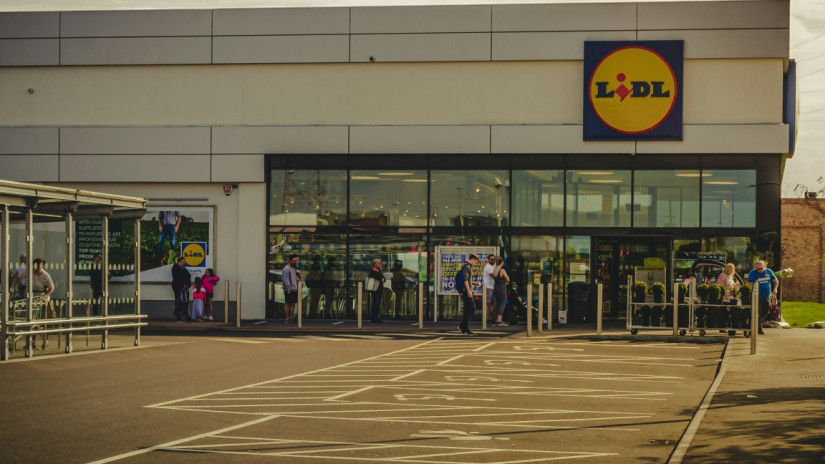
Between April 19th and 21st, 2024, in collaboration with the Food Banks network, Lidl Romania organized the tenth national food collection drive to support disadvantaged communities during the Easter holidays. With the help of Lidl customers, over 181 tons of food were collected, marking the largest quantity of food donated since the first edition of the collection drive.  

To provide additional support to vulnerable communities during the Easter holidays, Lidl Romania, together with the Food Bank and with the support of FEPRA, organized the tenth edition of the food collection drive for three days in April. The action took place nationwide, in all Lidl stores across the country, with the donated products collected by the 2,743 volunteers of the Food Banks and distributed to 207 NGOs from various regions of the country by the end of April. In total, over 181 tons of food were collected, reaching over 42,000 vulnerable individuals in nursing homes, foster care centers for minors, soup kitchens, or shelters.

The donated products included non-perishable items such as basic foods (oil, flour, sugar, rice, baking ingredients), canned vegetables, canned meat, canned fruits, pasta, sauces, UHT milk (shelf-stable), packaged bakery products, biscuits, coffee, tea, jam, and preserves. All nine Regional Food Banks of the network participated in this edition of the collection campaign, located in Bucharest, Cluj, Roman, Brasov, Oradea, Timisoara, Constanta, Craiova, and Galati.

Here are some key figures illustrating the impact of community solidarity:

Cereals and bakery products represented approximately half of the collected quantity, followed by fats and oils, protein-based products, and confectionery items.
Customers made record donations at Lidl stores in Huși, Vaslui County (5,148 kg), Râmnicu Vâlcea, Vâlcea County (3,252 kg), and Târgu Lăpuș, Maramureș County (3,232 kg).
At the regional level, the largest quantities of food were collected and directed by the Food Bank Cluj (over 41 tons), Roman (over 28 tons), and Bucharest (over 23 tons), to 104 beneficiary NGOs.
Food collections organized at Lidl stores are not the only actions through which the retailer aims to support the mission of the Food Bank. As a founding partner, the retailer has committed to financially support the startup costs for each newly established Regional Bank and a portion of the operating costs, as well as to contribute to the development of infrastructure for such a network. 


RECOMMENDED
RECOMMENDED FROM THE HOME PAGE
Industry

Lidl Romania exceeds 2030 sustainability targets early

Lidl Romania has published its eighth sustainability report for the 2024 financial year, announcing accelerated progress in reducing environmental impact. The retailer has achieved its international 2030 target for transitioning to natural refrigerants, with these now used in 100% of logistics centres and 81.7% of stores, compared to the original goal of 100% of logistics centres and 40% of stores. The company has also increased its green energy usage to 80% of total consumption.

Energy

Dentons advises OX2 on 235 MW Romanian wind acquisition

Global law firm Dentons has advised OX2 on acquiring three wind power projects totaling 235 MW in Romania from Future Power. The projects, located in Vaslui and Vrancea counties, are expected to be commissioned between 2028 and 2030, subject to permitting.

Energy

Turkish investors pour millions into Romanian green energy

Romania is emerging as a key destination for Turkish renewable energy investments, attracting growing interest from industrial and financial groups. Real grid connection opportunities for projects, infrastructure modernisation potential, and investment framework stability make Romania strategic for Turkish capital as Europe accelerates its transition to sustainable sources and energy independence.

Business

Cost remains main driver and biggest barrier in sustainability

51% of Romanian entrepreneurs see sustainability as a way to reduce operational costs, yet the same proportion say implementation is too expensive, according to a new study by BRD Groupe Société Générale. Conducted among micro and small-to-medium enterprises, the research outlines how Romanian entrepreneurs perceive the opportunities and challenges of transitioning to sustainable business models.

READ MORE
Green Forum  |  11 December, 2025 at 11:36 AM