Alina Oprea
| 15 September, 2023 at 2:45 PM
Environmentally friendly kindergarten to be built in Brașov
The first environment-friendly kindergarten will be built in the Noua district by two companies from Brașov.

The first environment-friendly kindergarten will be built in the Noua district by two companies from Brașov.

Wing has published its second ESG report, providing information about its environmental, social, and governance efforts, as well as its goals, the measures it has taken and the results it has achieved in 2022. The report has been prepared in accordance with the company's first comprehensive ESG strategy, which will be finalised soon.

PPF Real Estate's two office buildings in central Bucharest - Crystal Tower and Metropolis - are now running partially on solar power after their rooftops were successfully converted into photovoltaic sites.

A sustainable building, whatever its destination, can be 15-20% more expensive than an ordinary one, says Marian Ciupitu, General Manager of Terano Construct. He talked to Green Forum about the company's ESG strategy and about the advantages of a sustainable building. He also says that Romania is continually improving its position regarding environmentally friendly constructions, but compared to Western European countries, Romania is still far from being a role model in this aspect. Marian Ciupitu specifies that the company strives to develop sustainable buildings that reduce the impact on the environment, improve the lives of communities, and promote high standards of ethics and transparency in all operational aspects.

Romania produces on average over 3 million tons of construction waste annually.

Speedwell, a real estate developer in Romania, published its 2022 Sustainability Report, the first official ESG reporting document of the company.

Industrial & logistics spaces will play a crucial role in solar energy, as more than half of it will be provided by rooftop solar PV by 2030, according to a study from CBRE.

Lack of education in terms of ESG (environmental, social, and governance) and a poor number of good practice solutions are two of the challenges in the field, says Matius Ichim, Architect at Matius Studio and owner of the retail platform www.prioretail.ro. He talked to Green Forum about the advantages of a sustainably built commercial space. He says that 15-20% of the operating networks in Romania have started implementing ESG key principles in their fit-out design and close to 5% in full sustainable standards.

The number of "green" or smart projects has increased by 100% in the last 10 years.

Sonae Sierra has reduced its CO2 emissions by approximately 90% from 2005 to date and its electricity consumption by 66% since 2002. The company announces that it has avoided costs of €34.9 million by implementing eco-efficiency measures.

The schools in Vrancea will be equipped with photovoltaic panels. The Minister of Investments and European Projects, Marcel Boloș, and the President of the Vrancea County Council, Cătălin Toma, signed the contract worth a total of €1.2 million for the production of green energy in the county. The contract will finance the project "Investments in electricity production capacities for own consumption at the level of Vrancea County". The project is financed by the Large Infrastructure Operational Program 2014-2020.

Drobeta Turnu Severin Emergency County Hospital becomes energy efficient, by installing monocrystalline photovoltaic panels. The Mehedinți County Council announces that an important part of the modernization and energy efficiency project of the hospital's main building is the thermal efficiency of the building together with alternative energy sources that will ensure both patient comfort and lower costs for the maintenance of the medical unit.

Romania must invest in the rehabilitation of buildings and heating systems to reduce energy poverty, through REPowerEU, according to the Romanian Energy Poverty Observatory (ORSE) experts. The essence of the REPowerEU investments and reforms package is to reduce energy poverty and the effects of the crisis at the level of the European Union. Measures such as improving the insulation of buildings inhabited by vulnerable consumers and replacing their heating and cooling systems with modern types of equipment are the most effective way to tackle energy poverty.

Romanians who want photovoltaic panels can apply for the Casa Verde Photovoltaic Program, starting on May 19. The application submission period for natural persons is May 19 - June 26. The total budget allocated to the program is RON2 billion (€400 million) and the subsidy is a maximum of RON20,000 (€4,000); on the other hand, the beneficiaries must contribute at least RON2,000 (€400).

The Babeş-Bolyai University in Cluj-Napoca has accessed a European project of €3.8 million to increase the energy efficiency of the buildings of the chemical research institute. The implementation period of a project is two years.

Kaufland becomes the first Zero Waste certified company in Romania. At least 90% of all operational waste has been prevented, reused, recycled, composted, or fermented. The goal is to limit the amount of waste, make waste reuse more efficient, and evaluate the performance of the waste and recyclable materials management system.

NEPI Rockcastle receives a new green financing of €200 million, for Mega Mall and Promenada Sibiu. The loan proceeds will be used to repay the revolving credit facilities used for the acquisitions of Forum Gdansk and Copernicus Shopping Centre, which were completed in December 2022. Subsequently, the Group's total revolving credit facility capacity will be restored to €620 million.
The Sibiu County Council announces investments of RON 2.48 million (€496,000) for the energy efficiency of the Dental Clinic building, within the Sibiu County Emergency Clinical Hospital. A charging station for electric vehicles will also be installed within this project.

The Doraly Expo Market commercial park is investing €2.1 million in energy efficiency solutions, by installing photovoltaic power plants, and charging stations for electric cars and replacing all lighting fixtures with LEDs. The photovoltaic panels will produce approximately 2,700 MWh of green energy annually, representing approximately 50% of the energy consumed.

Globalworth analyzed its performance over 3 years and set its environmental target of reducing its GHG emissions intensity by 40% by 2030 compared to its baseline 2019 levels. About 90% of the group's commercial properties are green-certified and about 98% of the energy used in the portfolio came from renewable sources at the end of 2022.

Building owners in Romania are much more interested in ESG standards and also have higher expectations when it comes to sustainability than their counterparts in other countries, according to a survey by CBRE.
The Echo-Archicom 2030 strategy is to follow a road map that lays out year by year how both companies are to decarbonize through zero-emission developments while further increasing the role of greenery in the group's projects and supporting appropriate city development.

The tenants of IRIDE Park collected 10 tons of recycled paper and planted 30 trees within the park, as part of a campaign organized by CPI Romania. The company mentions that the ESG principles govern its entire activity, and this campaign is on the list of social responsibility projects of the company.

Green building certifications have become a must for landlords seeking competitive differentiators in today's challenging real estate market. Retail is the “greenest” sector, followed by industrial & logistics, and office, according to a Colliers report. In the coming years, landlords who fail to align with stakeholders' sustainability - demands will be affected, say the consultants.
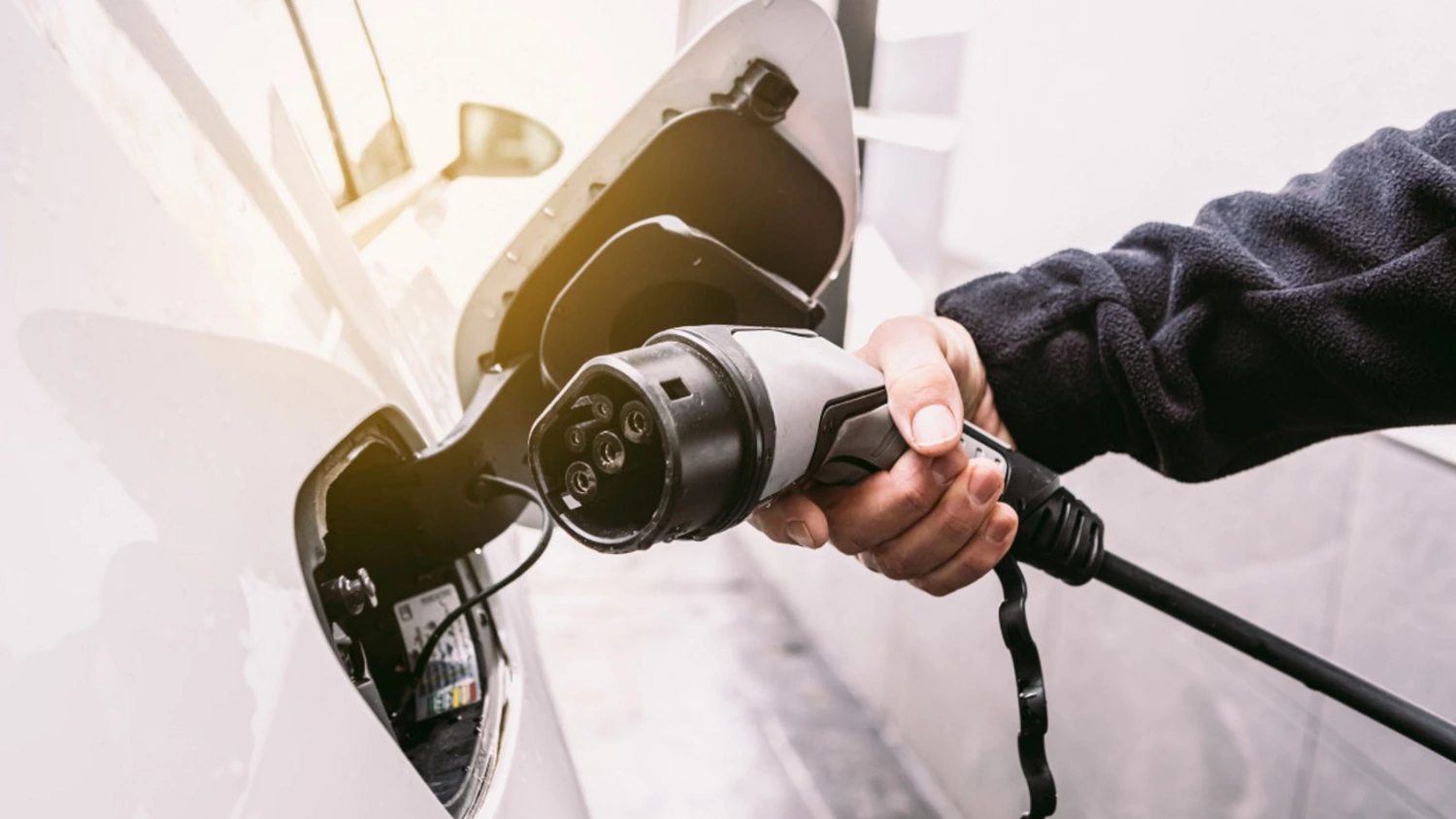
The European Bank for Reconstruction and Development is providing €35 million to GreenWay as part of a €113 million financing package to expand electric vehicle charging infrastructure across Central Europe.
The newly published Edition 2 2026 of the PV Module Manufacturer Ranking Report shows the first signs of stabilisation in the solar manufacturing sector's balance sheets after more than a year of steady deterioration. The table tracks the Altman Z-Score, a widely used measure of bankruptcy risk, for 64 publicly listed photovoltaic module manufacturers, and has now been refreshed with first-quarter 2026 data.
The Faculty of Hydrotechnics from the Technical University of Civil Engineering Bucharest and Waldevar Floating PV have signed a strategic partnership to accelerate innovation in renewable energy and prepare the next generation of specialists in floating photovoltaic technologies.
Join Lisa Chase and Tjidsger Wierda for a workshop on 28 May
Rezolv Energy has commissioned the St. George solar park in Silistra, Bulgaria, marking the company's first project to become operational. The 225 MW facility reached full operational status in under three years from acquisition of development rights.