How can cities fight water scarcity and drought?

Green Forum
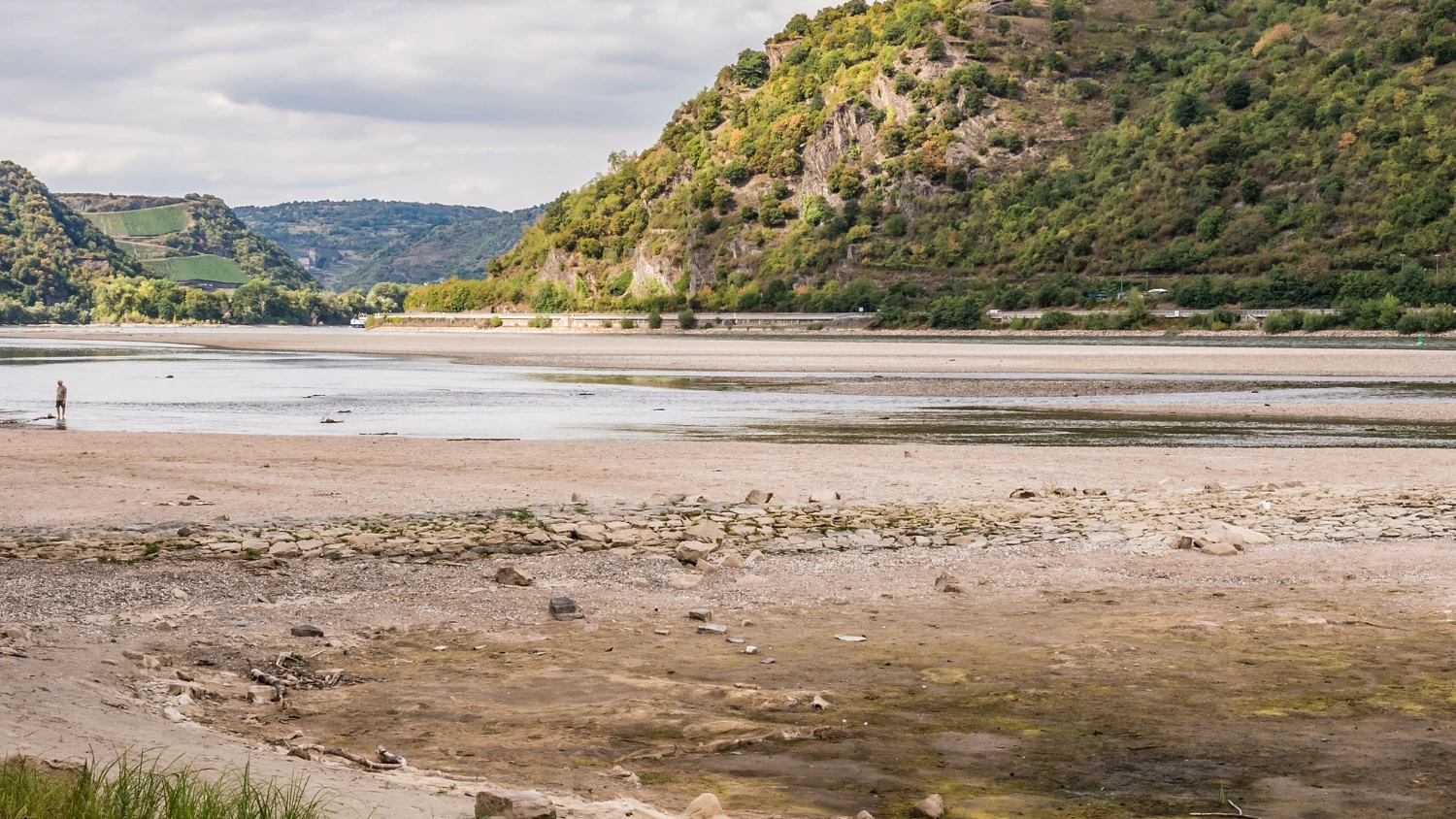
Water scarcity is no longer limited to historically dry regions of Southern Europe. According to the European Drought Observatory, drought conditions intensified across France, Germany, Austria, Hungary, Romania and the United Kingdom in June 2026. Low water levels in German rivers are affecting shipping and industry, while England's 2025 drought led to water restrictions for millions of people and historically low reservoir levels.

"Increasingly, water is available in the wrong place at the wrong time. Long dry periods are followed by intense rainfall that soils and drainage systems can barely absorb. Managing these extremes is becoming one of the key infrastructure challenges of our time," said Dr. Stephan Wasielewski, Head of Water Infrastructure at Drees & Sommer.

Drees & Sommer identifies five areas where cities and infrastructure operators can act. The first is retaining rainwater locally through infiltration areas, green roofs and cisterns. In Berlin, the firm supported the district of Lichtenberg in developing green and infiltration areas across around 135,000 sqm of sealed surfaces at schools, reducing runoff into the sewer network. The second area is reducing losses in ageing infrastructure using digital leak detection and AI-based forecasting tools to identify pipe failures before major leaks occur.

The third approach involves reusing water for irrigation, technical systems or industrial processes where drinking-water quality is not required. For Alzchem Group in southern Germany, Drees & Sommer is assessing how process water from the company's central wastewater treatment plant can be treated and reused within operations. The fourth area is improving transparency through digital tools and registers such as Ireland's national Water Abstraction Register. The fifth is expanding green infrastructure in cities to allow water infiltration and reduce urban heat, as demonstrated by a landscape concept developed for the 27-hectare Telegrafenberg campus in Potsdam, where around 78% of trees have already been affected by heat and drought.

"What matters now is how quickly cities and municipalities prepare for changing climate conditions and increasing pressure on water resources," said Wasielewski. While households can contribute through rain barrels and water-saving fixtures, Drees & Sommer argues that the greatest impact will come from investment in infrastructure, stormwater management and water reuse systems.

RECOMMENDED
ESG under scrutiny as investors, banks and tenants raise the stakes
Real estate

ESG under scrutiny as investors, banks and tenants raise the stakes

As ESG expectations move from aspiration to obligation, real estate leaders are being forced to confront how sustainability directly affects asset value, financing and long-term resilience. Chaired by ESG Partner Tjidsger Wierda of Walvius Partners, the sustainability session at CEE Property Forum 2025 brought together a range of expertise and pragmatic perspectives on the evolving role of ESG (Environmental, Social, Governance) in commercial real estate.

Smarter operations for older buildings: Unlocking fast energy savings with AI control
Real estate

Smarter operations for older buildings: Unlocking fast energy savings with AI control

Older buildings usually consume more energy in operation than new construction. That is not only a cost issue. It also affects how an asset performs against market standards like BREEAM, EU Taxonomy, and CRREM, as well as regulations such as the Energy Performance of Buildings Directive and the rules for Building Automation and Control Systems (BACS). Many owners assume the only way to close the gap is a major refurbishment. Better insulation and new equipment certainly help, but they are expensive and disruptive. Investments in deep fabric and equipment upgrades can reach one to five percent of the asset value.

New energy certificates directive shifts from recommendations to sanctions
Real estate

New energy certificates directive shifts from recommendations to sanctions

Only 14% of office buildings across the Prague market have achieved an Energy Performance Certificate in class A or B, with older properties having a higher probability of being classified in lower energy performance classes. An internal Savills survey, covering dozens of properties, has revealed that a significant proportion of Prague's office stock is facing the need for modernisation. 

CEE industrial market becomes more selective and data-driven
Real estate

CEE industrial market becomes more selective and data-driven

The industrial real estate market in CEE has entered 2025 with strong momentum. According to new market data released by iO Partners, the total stock of industrial space has reached 34.4 million sqm in Q1 2025, marking a 1.1% quarter-on-quarter increase. 

Prague to host GBCI Circle Europe 2025
Real estate

Prague to host GBCI Circle Europe 2025

The GBCI Europe Circle conference was established to provide the LEED community in Europe with a space for professional and social exchange. The next edition is scheduled to take place in Prague from May 14-16 and Property Forum is proud to be joining the event as Media Partner. More about the event's significance and program has been shared by Kay Killman, Managing Director of GBCI Europe, Vessela Valtcheva-McGee, Director Market Development EE and Simona Kalvoda, Executive Director of the Czech Green Building Council (CZGBC).

Wing publishes second ESG report
Real estate

Wing publishes second ESG report

Wing has published its second ESG report, providing information about its environmental, social, and governance efforts, as well as its goals, the measures it has taken and the results it has achieved in 2022. The report has been prepared in accordance with the company's first comprehensive ESG strategy, which will be finalised soon.

RECOMMENDED FROM THE HOME PAGE
Energy

Solar module makers show first financial stability in over a year

The newly published Edition 2 2026 of the PV Module Manufacturer Ranking Report shows the first signs of stabilisation in the solar manufacturing sector's balance sheets after more than a year of steady deterioration. The table tracks the Altman Z-Score, a widely used measure of bankruptcy risk, for 64 publicly listed photovoltaic module manufacturers, and has now been refreshed with first-quarter 2026 data.

Energy

Romanian floating solar pioneer partners with university

The Faculty of Hydrotechnics from the Technical University of Civil Engineering Bucharest and Waldevar Floating PV have signed a strategic partnership to accelerate innovation in renewable energy and prepare the next generation of specialists in floating photovoltaic technologies.

Energy

Rezolv Energy launches Bulgaria's St. George solar park

Rezolv Energy has commissioned the St. George solar park in Silistra, Bulgaria, marking the company's first project to become operational. The 225 MW facility reached full operational status in under three years from acquisition of development rights.