Real estate |
11 August, 2026 at 11:56 AM
7R Group has published its 2025 Sustainability Report, prepared in accordance with the Corporate Sustainability Reporting Directive (CSRD), the simplified European Sustainability Reporting Standards (ESRS) and the EU Taxonomy. The report is the company's third, published voluntarily despite the absence of a formal reporting obligation in 2025. 7R is a commercial real estate developer active in Poland, the Czech Republic and Germany, with a delivered portfolio exceeding 2 million sqm and a further 3.9 million sqm at various stages of preparation.
Real estate |
29 July, 2026 at 2:41 PM
GTC Group has published its 2025 ESG Report, covering sustainability performance across seven Central and Eastern European markets. The report, prepared in accordance with GRI standards, spans a commercial portfolio of 38 office buildings and 6 shopping centres in Poland, Hungary, Serbia, Romania, Bulgaria and Croatia, alongside a residential portfolio. The company reports that 99% of its commercial buildings are now certified under LEED, BREEAM or DGNB standards, or are undergoing recertification.
Real estate |
27 July, 2026 at 12:36 PM
Water scarcity is no longer limited to historically dry regions of Southern Europe. According to the European Drought Observatory, drought conditions intensified across France, Germany, Austria, Hungary, Romania and the United Kingdom in June 2026. Low water levels in German rivers are affecting shipping and industry, while England's 2025 drought led to water restrictions for millions of people and historically low reservoir levels.
Real estate |
20 July, 2026 at 6:00 AM
The modern industrial and logistics sectors in Central and Eastern Europe are navigating a highly complex macroeconomic environment. Globally, industry consumes 24% of total energy1, and in an era of volatile utility prices, energy efficiency has shifted from a corporate social responsibility initiative to an operational imperative. Simultaneously, facility and plant managers grapple with continuous operational risks. Industry data reveals that the average manufacturing plant loses between 5% and 20% of its annual productivity to unplanned downtime2 – an issue that 90% of manufacturers rank as their top operational threat. Faced with persistent skilled labour shortages and an ageing workforce, industrial operators must fundamentally rethink their infrastructure strategy to secure long-term competitiveness.
Real estate |
8 April, 2026 at 9:24 PM
A structural shift is rewriting the financial logic of European commercial real estate. It isn't being driven by ESG pressure or voluntary sustainability labels. It's being driven by regulation — and the numbers are concrete enough that ignoring them is becoming a financial risk. A recent white paper by workcloud24 traces the mechanism in detail: how the operational energy and CO₂ performance of a building transmits into net operating income, asset value, and financing conditions. The argument isn't that green buildings are virtuous. It's that inefficient buildings are becoming measurably more expensive to own, operate, and finance.
Real estate |
22 December, 2025 at 9:11 AM
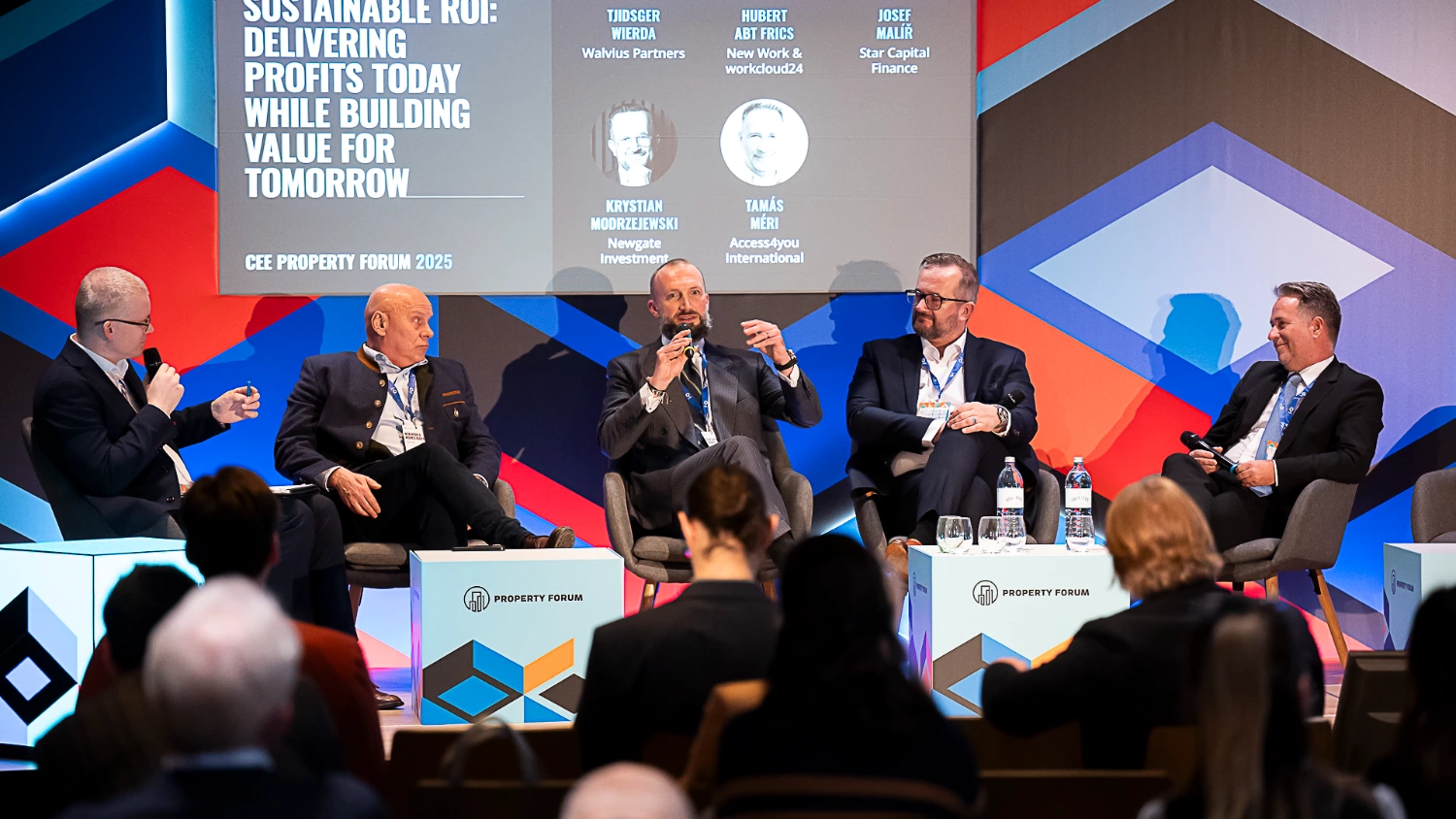
As ESG expectations move from aspiration to obligation, real estate leaders are being forced to confront how sustainability directly affects asset value, financing and long-term resilience. Chaired by ESG Partner Tjidsger Wierda of Walvius Partners, the sustainability session at CEE Property Forum 2025 brought together a range of expertise and pragmatic perspectives on the evolving role of ESG (Environmental, Social, Governance) in commercial real estate.
Real estate |
20 November, 2025 at 5:01 PM
Older buildings usually consume more energy in operation than new construction. That is not only a cost issue. It also affects how an asset performs against market standards like BREEAM, EU Taxonomy, and CRREM, as well as regulations such as the Energy Performance of Buildings Directive and the rules for Building Automation and Control Systems (BACS). Many owners assume the only way to close the gap is a major refurbishment. Better insulation and new equipment certainly help, but they are expensive and disruptive. Investments in deep fabric and equipment upgrades can reach one to five percent of the asset value.
Environment |
10 October, 2025 at 9:55 AM
The Annual Water Report, based on over 13.5 billion liters of monitored water usage across 5,370 properties in 36 countries, reveals that 67% of properties experience water leakage yearly. With rising water scarcity, increasing tariffs, aging infrastructure, and stricter regulations, property owners are under growing pressure to better understand their water consumption.
Real estate |
20 August, 2025 at 4:13 PM
Only 14% of office buildings across the Prague market have achieved an Energy Performance Certificate in class A or B, with older properties having a higher probability of being classified in lower energy performance classes. An internal Savills survey, covering dozens of properties, has revealed that a significant proportion of Prague's office stock is facing the need for modernisation.
Real estate |
12 August, 2025 at 5:47 PM
96% of European logistics tenants are planning to expand their capacity in the next 12 months, to a greater or equal extent than in the past year, according to the latest CBRE survey.
Real estate |
18 June, 2025 at 3:54 PM
According to Savills' global network research, almost 90% of respondents are anticipating an increase in daily office attendance requirements from companies this year. One of the main drivers of this change is Generation Z.
Real estate |
17 June, 2025 at 4:00 PM
The industrial real estate market in CEE has entered 2025 with strong momentum. According to new market data released by iO Partners, the total stock of industrial space has reached 34.4 million sqm in Q1 2025, marking a 1.1% quarter-on-quarter increase.
Real estate |
16 April, 2025 at 2:37 PM
The GBCI Europe Circle conference was established to provide the LEED community in Europe with a space for professional and social exchange. The next edition is scheduled to take place in Prague from May 14-16 and Property Forum is proud to be joining the event as Media Partner. More about the event's significance and program has been shared by Kay Killman, Managing Director of GBCI Europe, Vessela Valtcheva-McGee, Director Market Development EE and Simona Kalvoda, Executive Director of the Czech Green Building Council (CZGBC).
Business |
15 January, 2025 at 3:45 PM
It is still a long way to embedding ESG principles into corporate culture, operations, and decision-making processes. That was the main takeaway from a panel at CEE ESG Forum 2024 organised by Property Forum and Green Forum in Vienna last November.
Real estate |
22 August, 2024 at 1:20 PM
Property Forum's annual SEE Property Forum Award Ceremony will take place during SEE Property Forum on 22 October 2024. The list of award categories is already available and nominations are now open until September 16th. Property Forum's Country Manager for Romania Fulvia Meirosu and CEO Csanád Csürös answered all potential questions related to the nomination process and explained how the winners will be selected.