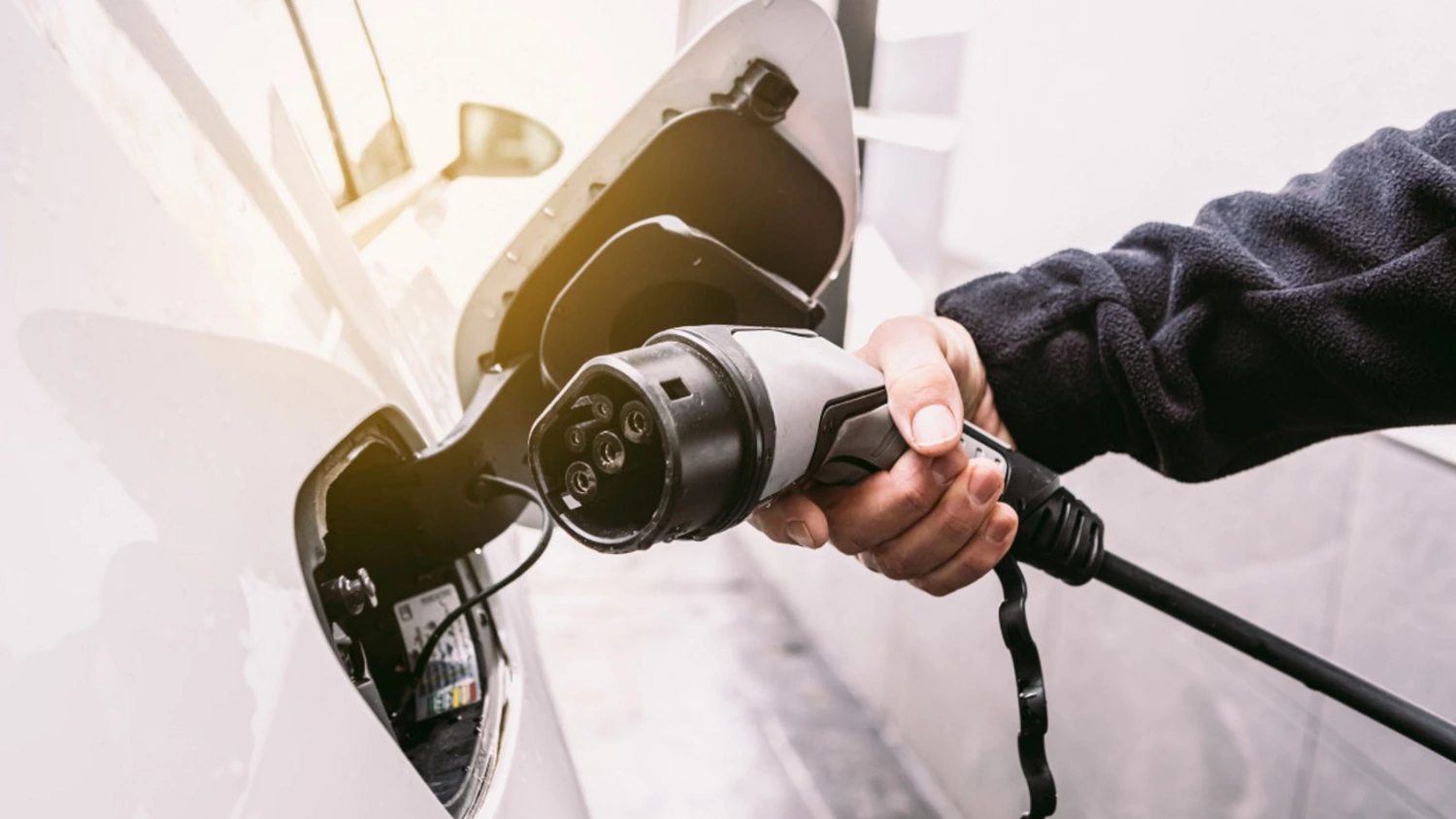
Charging an electric car at home can be free

Alina Oprea
The market of electric and plug-in hybrid cars in Romania has accelerated growth thanks to the incentives granted through the Rabla Plus Program and the cost of use of these eco vehicles. More and more Romanians who stay at home prefer to buy electric cars due to the cost per km traveled, and the convenience offered by the fact that they charge their car at home. This includes the possibility of charging from photovoltaic panels. Before switching to electromobility, they research the market to find out how much it costs to install a power station, how much power they need and what are the best power stations for the home. Charging an electric car at home can also be free if the energy comes from your own solar panels. For this there are solutions such as V2C Trydan, which can connect directly to the inverter of the solar panels, using all or part of the energy they provide.

From an analysis carried out by EVconnect, a company specializing in the installation of electric car charging systems, together with V2C, a European manufacturer of electric stations it appears that the investment to buy and install at home a station with a Type 2 connection varies between RON4,800 (€960) and RON6,500 (€1,300) including installation. This depends on the power of the station, the complexity of the work, the distance between the electrical panel, and the location of the station.

Installing a home charging station has some challenges related to location and available power. However, it does not matter that the power supply is lower than the maximum power provided by the station. Power stations like V2C Trydan have the possibility to limit the charging power according to household consumption and the maximum contracted power.

What features a station must have to reduce its charging costs:

- Connectivity with the inverter. V2C Trydan has the possibility to connect to any type of inverter without additional devices, thus reducing the cost of installation.

- Management application. This function of the Trydan station provides information about the energy used during each charging session and allows the exclusive use of the surplus energy produced by the panels as well as the power supply directly from the batteries.

- Dynamic loading. The recommendation of EVconnect specialists is to have 32 amps secured. You can see this in the electricity supply contract. Depending on the connection you have, you can install a single-phase (7 KW) or three-phase (22 KW) station, the intelligent stations can also provide dynamic power balance depending on the available current.

- A cable as long as possible. One of the most important features is that the home power station has a long cord. This gives you flexibility. Therefore, the power station must have a cable at least 5 meters long. If you have two cars and only one station, a long cable helps you charge them without moving them. A long cable also helps in the future, in case the next electric car has the charging port located differently on the car than the one you currently have.

- Compliance certification and correct installation. This certifies that the power stations meet safety standards. Also, significant for quality charging, thus extending battery life, is MODE 3 communication between the station and the car.

To find out how much it costs to “fill up” an electric car at home, multiply the net capacity of the battery by the price you have for one kWh on your energy bill.

For example, a Tesla Model 3 that has a battery with a net capacity of 57 kWh can be charged at home at a cost of 57 lei, if you have a tariff of 1 leu/kWh at the energy supplier. Thus, you can travel about 400 km with a Tesla Model 3 at the cost mentioned above.

EVconnect engineers have been providing consultancy in the purchase and installation of electrical substations for over ten years for commercial premises, offices, and residential customers. The company owns one of the largest public charging networks in Romania, which will have over 500 electric stations by the end of the year.

RECOMMENDED
ENGIE Romania launches management solution for charging stations
Mobility

ENGIE Romania launches management solution for charging stations

ENGIE Romania launches a complete management solution for electric car charging stations. ENGIE Romania, in partnership with Etrel, a Landis+Gyr company, is launching a management solution for electric charging stations, available to individuals, companies, and public charging stations.

Fully electric Ford model to be produced in Craiova
Mobility

Fully electric Ford model to be produced in Craiova

Ford presents the E Tourneo Courier, a fully electric model, which will be produced in the Ford Otosan factory in Craiova. The E-Tourneo Courier will be available from the end of 2024. The car will have five seats.

Keno enters the Romanian market with solar systems
Energy

Keno enters the Romanian market with solar systems

Poland-based Keno enters the Romanian market with solar systems, installation, and heat pumps. The company is already present in Germany, Great Britain, Norway, Poland, Hungary, and the Czech Republic, specializing in the production of solar panels, heat pumps, switchboards, and mounting systems.

Ministry of the Environment to launch a program to buy electric minibuses
Regulation

Ministry of the Environment to launch a program to buy electric minibuses

The Minister of the Environment, Tanczos Barna, says that every day he travels with an electric car in Bucharest. He says that he supports the purchase of electric cars through the Rabla Plus Program, run by the Environment Fund Administration (AFM), and this year the authorities are considering a program that supports the purchase of electric minibusses.

EVconnect to reach 500 electric charging stations in Romania
Mobility

EVconnect to reach 500 electric charging stations in Romania

The EVconnect electric car charging network will exceed the threshold of 500 stations by the end of the year, and by 2025 the network will include at least 3,000 electric car charging stations. Last year, 166,244 charging sessions were registered on the EVconnect network, totaling 2.37 Gwh, which represents a reduction in the CO2 footprint of 1,989 tonnes.

RECOMMENDED FROM THE HOME PAGE
Energy

Waldevar Energy builds utility-scale PV parks in Romania

Waldevar Energy has begun construction on two utility-scale photovoltaic parks for Doral Energy in Tudor Vladimirescu (Brăila County) and Ștefan Vodă (Călărași County), Romania. The projects will deliver 14 MWp of installed capacity using around 25,000 photovoltaic panels.

Industry

Lidl Romania exceeds 2030 sustainability targets early

Lidl Romania has published its eighth sustainability report for the 2024 financial year, announcing accelerated progress in reducing environmental impact. The retailer has achieved its international 2030 target for transitioning to natural refrigerants, with these now used in 100% of logistics centres and 81.7% of stores, compared to the original goal of 100% of logistics centres and 40% of stores. The company has also increased its green energy usage to 80% of total consumption.

Energy

Dentons advises OX2 on 235 MW Romanian wind acquisition

Global law firm Dentons has advised OX2 on acquiring three wind power projects totaling 235 MW in Romania from Future Power. The projects, located in Vaslui and Vrancea counties, are expected to be commissioned between 2028 and 2030, subject to permitting.

Energy

Turkish investors pour millions into Romanian green energy

Romania is emerging as a key destination for Turkish renewable energy investments, attracting growing interest from industrial and financial groups. Real grid connection opportunities for projects, infrastructure modernisation potential, and investment framework stability make Romania strategic for Turkish capital as Europe accelerates its transition to sustainable sources and energy independence.

READ MORE
Green Forum  |  17 December, 2025 at 8:49 AM
Green Forum  |  11 December, 2025 at 11:36 AM