EU boosts offshore energy goals

Green Forum
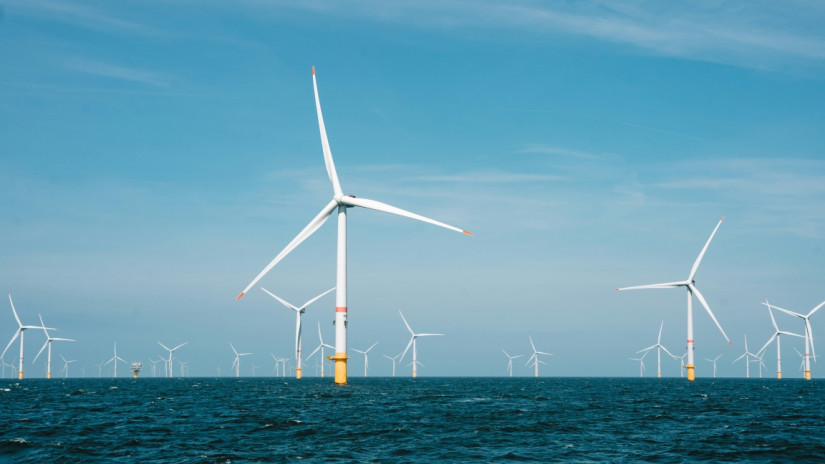
EU countries have updated their goals for the deployment of offshore renewable energy up to 2050 in each of the EU's 5 sea basins, with intermediate objectives to be achieved by 2030 and 2040.

 At an online meeting of the Directors-General of the Ministries of Energy in the respective countries today, non-binding agreements were reached on the updated level of ambition. The combined figures result in an overall ambition of installing approximately 88 GW of offshore renewable generation capacity by the end of this decade, rising to around 360 GW by mid-century. This compares to a level of more than 20 GW installed in the EU today. 

This confirms that Member States continue to attach high importance to offshore renewables for EU energy security and the clean energy transition, providing the stability the sector needs for its further development up to 2050.

Building on strong regional cooperation instruments and tools established by the revised Regulation on trans-European energy networks (TEN-E Regulation), today's agreements not only confirm the continued importance Member States attach to offshore renewables and send a strong signal to encourage the necessary investment, but, by going beyond national approaches, they are also taking a trans-European approach. This framework will allow for a cost-effective expansion of the grids needed to incorporate the expected offshore renewable generation, tackling internal bottlenecks where they occur and incurring the least environmental impact. 

With these milestones agreed, the European Network of Transmission System Operators for electricity (ENTSO-E) will now update the strategic integrated offshore network development plans (ONDPs), giving visibility to grid promoters, investors and the supply chain on what offshore grids to expect for each sea basin by 2050. 

RECOMMENDED
RECOMMENDED FROM THE HOME PAGE
Industry

Lidl Romania exceeds 2030 sustainability targets early

Lidl Romania has published its eighth sustainability report for the 2024 financial year, announcing accelerated progress in reducing environmental impact. The retailer has achieved its international 2030 target for transitioning to natural refrigerants, with these now used in 100% of logistics centres and 81.7% of stores, compared to the original goal of 100% of logistics centres and 40% of stores. The company has also increased its green energy usage to 80% of total consumption.

Energy

Dentons advises OX2 on 235 MW Romanian wind acquisition

Global law firm Dentons has advised OX2 on acquiring three wind power projects totaling 235 MW in Romania from Future Power. The projects, located in Vaslui and Vrancea counties, are expected to be commissioned between 2028 and 2030, subject to permitting.

Energy

Turkish investors pour millions into Romanian green energy

Romania is emerging as a key destination for Turkish renewable energy investments, attracting growing interest from industrial and financial groups. Real grid connection opportunities for projects, infrastructure modernisation potential, and investment framework stability make Romania strategic for Turkish capital as Europe accelerates its transition to sustainable sources and energy independence.

Business

Cost remains main driver and biggest barrier in sustainability

51% of Romanian entrepreneurs see sustainability as a way to reduce operational costs, yet the same proportion say implementation is too expensive, according to a new study by BRD Groupe Société Générale. Conducted among micro and small-to-medium enterprises, the research outlines how Romanian entrepreneurs perceive the opportunities and challenges of transitioning to sustainable business models.

READ MORE
Green Forum  |  11 December, 2025 at 11:36 AM