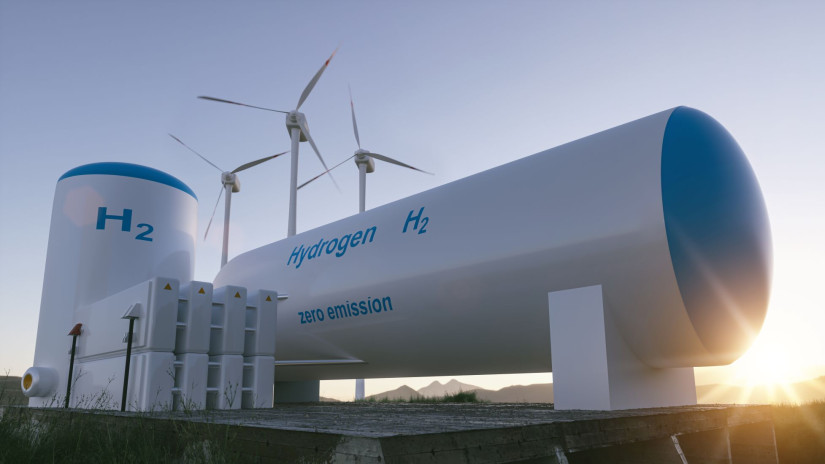


As discussions intensify over the placement of new solar and wind projects, the EEB's study clarifies the spatial requirements for achieving 100% renewable energy in Europe sustainably.
Key Findings:
Minimal Land Needed: Only 2.2% of the EU's total land area is required for current and future solar and wind projects to phase out fossil fuels and nuclear power, enabling the EU to reach climate neutrality by 2040.
Ample Suitable Land: According to the Joint Research Centre (JRC), 5.2% of EU land is considered suitable for solar and wind development, based on strict criteria that consider agricultural, environmental, and technical factors.
Rural Areas as Leaders: The majority of suitable land for sustainable renewable deployment is located in rural areas, with 78% suitable for ground-mounted solar PV and 83% for onshore wind.
Insufficient Rooftop Space: Urban and industrial areas alone cannot meet all solar capacity needs. However, there is ample degraded agricultural land available to expand solar energy without disrupting rural economies, which can coexist with food production and soil health restoration.
Coexistence with Agriculture and Nature: Renewables can coexist with agriculture and nature conservation. Integrating solar power with agricultural activities through dual-use standards like agri-PV is possible. With strong mitigation measures, EU countries can meet renewable energy and nature restoration goals, requiring 16.7% of land beyond current protected areas, ensuring synergy between the two.
Need for Solidarity and Interconnection: Germany and Italy lack sufficient suitable land for renewables when excluding natural reserves and productive agricultural areas. Conversely, Spain and Romania have an abundance of suitable land, well above their energy needs. A European "supergrid" is essential to connect resources, balance energy distribution, and achieve EU-wide decarbonization through cooperation and reduced waste.
The new EU Renewable Energy Directive (RED) mandates that member states designate ‘acceleration areas' for renewable energy projects, where approval processes will be streamlined, potentially bypassing some existing environmental legal requirements. This has raised concerns about potential conflicts with land use changes or the failure to coexist with nature conservation and community needs. The report clarifies that biodiversity-rich zones and productive agricultural land need not be compromised to achieve 100% renewables in Europe.
Strategic spatial planning, high environmental standards, and local community involvement are crucial for a nature-positive and inclusive renewable energy transition. By addressing the challenges and opportunities of renewable energy integration in rural areas, the EU can achieve its climate targets while promoting rural development and resilience. The EEB calls for continued support from policymakers, investment in infrastructure, and active engagement with local communities to lead the way in creating a sustainable and equitable energy future.