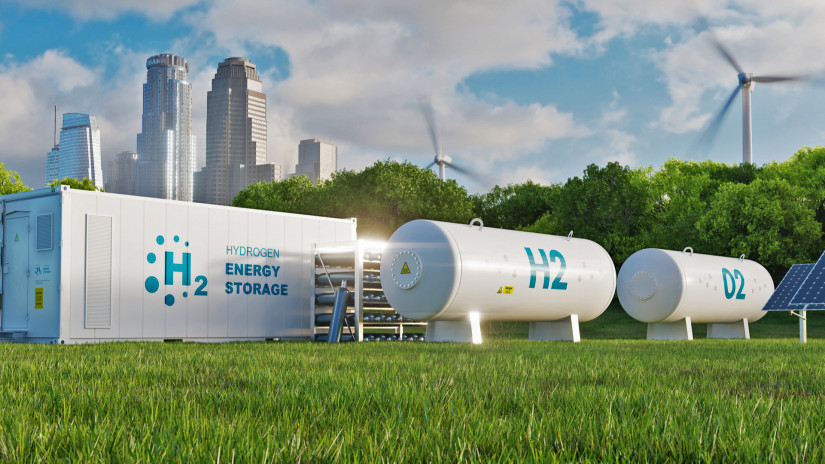


The measure will contribute to the achievement of the objectives of the EU Hydrogen Strategy and 'Fit for 55' package, by enabling the creation of hydrogen transmission infrastructure that is needed to foster the use of renewable hydrogen in industry and transport by 2030.
Germany notified the Commission of its intention to introduce a €3 billion scheme to support the construction of the domestic HCN. The HCN will be the backbone of long-distance transport pipelines for hydrogen in Germany and part of the European hydrogen backbone connecting several Member States.
The measure aims to facilitate investments in the construction of the HCN. Necessary investments include (i)repurposing existing gas pipelines to transport hydrogen, and (ii) building new hydrogen pipelines and compressor stations.
The construction and operation of the HCN will be financed by hydrogen transmission system operators (TSOs), who will be selected by the German federal network agency, Bundesnetzagentur.
The aid will take the form of a State guarantee which will allow the TSOs to obtain more favourable loans to cover initial losses in the ramp-up phase of the HCN. At first, Germany expects only a small number of consumers to be using the network, and the tariffs will be lower than otherwise needed to cover relevant costs, to encourage this use and facilitate the uptake of hydrogen.
The loans will be provided by the German national promotional bank Kreditanstalt für Wiederaufbau (‘KfW') at its own refinancing cost, below market rates. The loans will be paid back over a period ending in 2055, with reimbursements being progressively backloaded in line with the expected increase in hydrogen demand. The estimated aid amount of €3 billion corresponds to the additional financing costs that the TSOs would have had to bear absent the State guarantee.
The first major pipeline is expected to be operational from 2025, while the completion of the entire HCN is expected in2032.
The HCN will be regulated under the internal energy market legislation, making it subject to non-discriminatory third-party access and tariff regulation.
The measure complements steps taken under the Important Project of Common European Interest (IPCEI) framework, specifically the IPCEI ‘Hy2Infra', approved by the Commission in February 2024, so that these will translate into a mutually reinforcing investment in hydrogen infrastructure in Germany and the EU.