

This is the largest call for proposals under the current CEF Energy programme, both in terms of applications received and funding awarded and goes beyond the call's initial indicative budget of €850 million. It is also the first call under the revised TEN-E Regulation which includes hydrogen and offshore electricity grid projects.
As underlined by the Draghi report, such cross-border energy infrastructure investments are key to securing Europe's competitiveness. They will contribute to the EU's goals of integrating energy markets and decarbonising the energy system.
Overall, the funding is allocated for 5 works proposals and for 36 studies. Nearly €750 million of the funding is earmarked for 8 electricity grid projects including offshore and smart electricity grids. The largest grant, of €645 million, will support the Bornholm Energy Island project for the construction of an innovative, first-of-a-kind hybrid interconnector in the Baltic Sea that allows both to link Denmark and Germany and to integrate 3 GW of offshore windfarm capacity. Another grant for construction works of almost €33 million will go to Danube InGrid, a cross-border smart electricity project between Hungary and Slovakia that will integrate renewable energy and more efficiently balance the system. The other 6 projects, located in Belgium, Bulgaria, Denmark, France, Slovakia, and Spain, will receive grants for support studies.
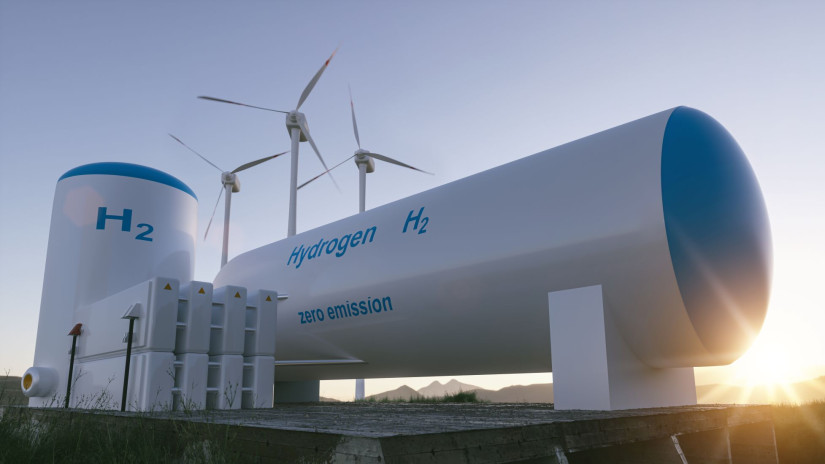
To help decarbonise EU industry, hydrogen infrastructure will benefit from grants for 21 development studies amounting to over €250 million. It will help to alleviate investment risks associated with this nascent market and complement the hydrogen policy framework introduced in the Hydrogen and decarbonised gas market package. The grants are intended for projects in Austria, Belgium, Czechia, Denmark, Estonia, Finland, France, Germany, Greece, Italy, Lithuania, Latvia, Poland, Portugal, Spain, and Sweden: notably the BarMar-H2med project between Spain and France, the backbone projects in Italy, Portugal and Spain, and the hydrogen corridors and routes in the Baltic region.
Additionally, funding worth €250 million will support the construction of 3 projects and the financing of 9 preparatory studies for CO2 infrastructure. The Prinos storage facility in Northern Greece will be awarded almost €120 million, thus contributing to the first carbon capture and storage value chain in the South-Eastern Mediterranean region. A second grant, for works worth €55 million, is destined for construction works of the North Sea L10 CO2 storage facility on the Dutch continental shelf. A third grant, for works of just below €12 million, will be awarded to the Norne CO2 facility in Denmark. CEF-funded CO2 projects are set to contribute to the 2030 target of 50 million tonnes of annual CO2 injection capacity as underlined in the Net Zero Industry Act.