
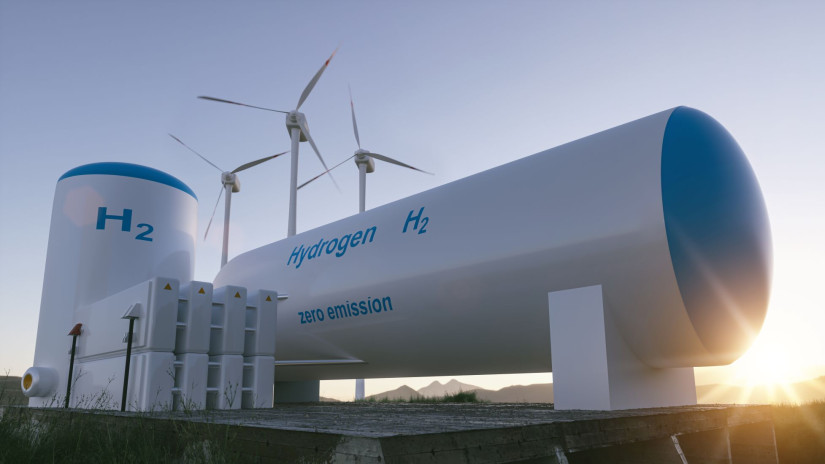


"We are operationalizing the largest investment for energy transition. We are talking about €3 billion, a sum financed from European funds. It is a state aid scheme to increase energy production from renewable sources – wind, solar, hydro, nuclear, and hydrogen resources. We are also financing technology for energy storage, and the completion of these investments will lead to lower prices in the medium and long term and increased production of green energy," said Marcel Ciolacu, Prime Minister.
At the beginning of March, the European Commission announced that it had approved a state aid scheme worth €3 billion notified by Romania, aimed at supporting onshore wind and photovoltaic solar installations to promote the transition to a "net zero" economy.
Romania notified the Commission, under the Temporary Crisis and Transition Framework, a €3 billion aid scheme to support installations producing onshore wind and photovoltaic solar energy. Within the measure, projects for the construction and operation of new electricity generation facilities from photovoltaic solar and onshore wind sources will be eligible. Aid will be granted through competitive bidding procedures and will take the form of a two-way contract for difference. The exercise price will be determined through bidding procedures ("pay-as-bid," corresponding payment to the offered price), and the reference price will be calculated as the monthly weighted average production price of electricity on the markets for the next day. When the reference price is lower than the exercise price, the beneficiary will be entitled to receive payments equal to the difference between the two prices. Conversely, when the reference price is higher than the exercise price, the beneficiary will have to pay the difference to the Romanian authorities.
Therefore, the scheme guarantees beneficiaries a minimum level of profitability and ensures at the same time that beneficiaries are not overcompensated for periods when the reference price is higher than the exercise price. The Commission found that the aid scheme notified by Romania meets the conditions set out in the Temporary Crisis and Transition Framework. Specifically, aid will be granted through a competitive bidding procedure and will be granted before December 31, 2025. In addition, the aid must meet several conditions aimed at limiting unjustified distortions of competition and is also subject to guarantees to ensure that there are sufficient participants in the competitive bidding procedure.