How to embed ESG principles into corporate culture?

Green Forum
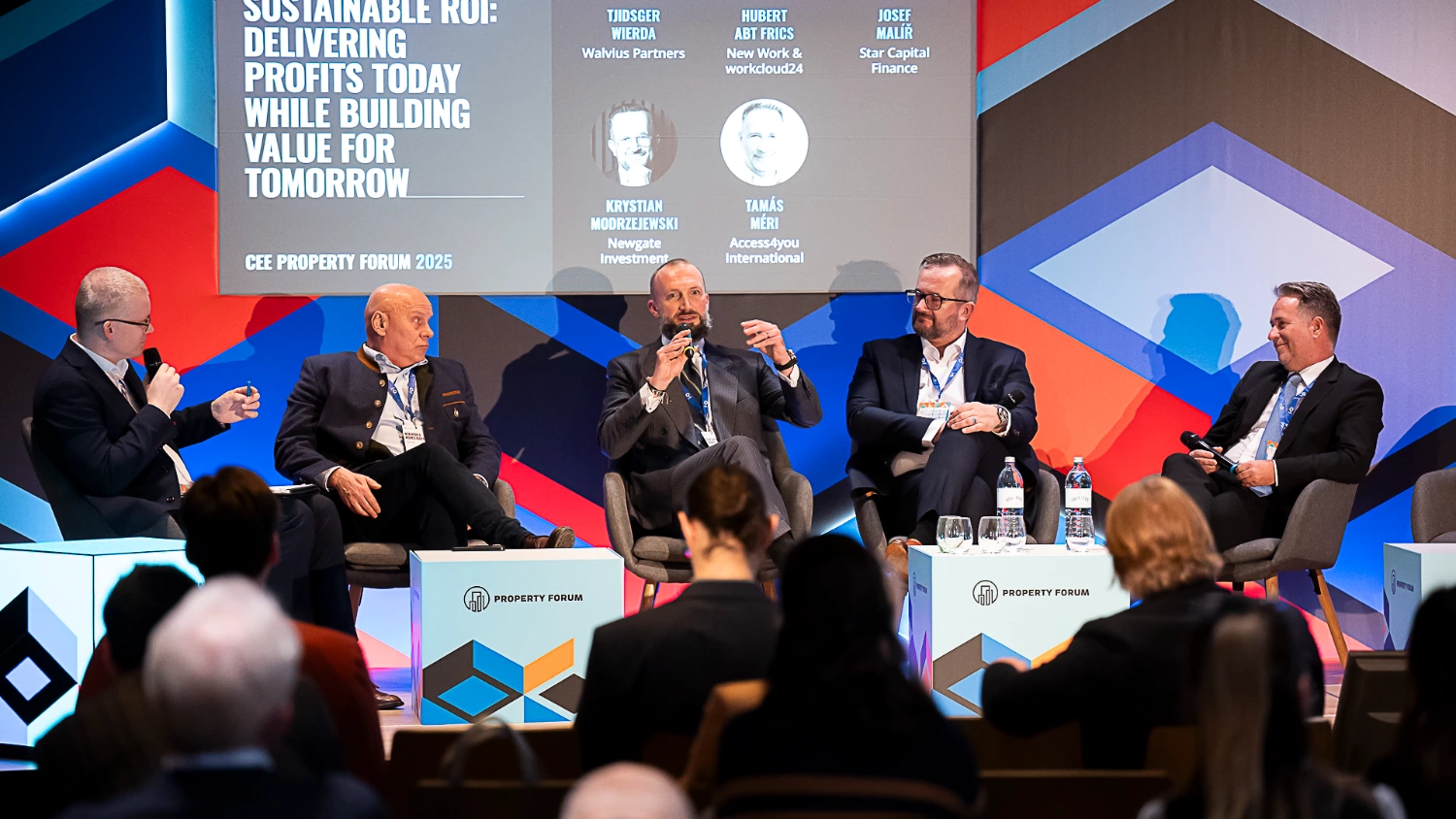
It is still a long way to embedding ESG principles into corporate culture, operations, and decision-making processes. That was the main takeaway from a panel at CEE ESG Forum 2024 organised by Property Forum and Green Forum in Vienna last November.

Exploring the practical aspects of implementing long-term ESG strategies within organizations, panellists concentrated on effective frameworks for measuring and reporting ESG performance, the importance of stakeholder engagement, and strategies for aligning ESG goals with business objectives. In a panel called „ESG in practice”, chaired by Gabriel Thoumi CFA FRM, CEO of Responsible Alpha, they also shared insights on challenges such as data accuracy, regulatory changes, and the cost of decarbonizing data centres.

Most of the participants supported the idea of having a special sustainability team at the corporations including developers and contractors and were unanimous about the importance of ESG as such. Some said however that there was no need to have a task force. Instead, all decision-makers and the so-called regular workers have to have a clear view of their particular job to achieve ESG goals.

Aneta Martišková, Corporate Affairs & CSR Director, Edenred Česká Republika said that „ESG compliance can help companies to raise reputation and give a message that the firm is capable of making real green steps”. She referred also to the way her firm works with SMEs, saying that smaller companies are not necessarily aware of the importance of ESG. She cited examples of starting a total digitalisation of a company, which was the very first step in a long journey to make the firm ESG compliant.

Jacek Hutyra, Chief ESG Officer, and Leroy Merlin Polska emphasized that internal ESG experts have to be able to explain ESG measures to managers and the rest of the firm differently, by using storytelling methods. According to him, stakeholders may differ very much in the way they understand ESG. He argued against using acronyms like ESG and CSR, suggesting that communication should be tailored to specific stakeholders' needs.

Răzvan Nica, Managing Director, BuildGreen & Carbon Tool was pessimistic about the short-term prospects as he mentioned that the biggest challenge now was the continuous change in regulations in all affected industries across the continent. „We have to get rid of general terms and are pushed to clarify definitions to achieve results”, he argued.

Experts were glad to see meaningful changes in the attitude of tenants of commercial properties. They argued that some three to four years ago landlords were alone in stressing the importance of ESG and the majority of tenants were ignorant. Today the picture is different, a growing number of tenants have come forward with the need to include their steps into the lease agreement. Green Leases are gaining popularity mostly in the office sector with the industrial segment in the second place. At that point, the chair added that there are no standardized Green Lease products issued by banks and lenders yet.

Panellists agreed that today carbon emission is the best measurable part of ESG performance and criticised the approach that repeatedly stressed the importance of EU taxonomies. They also said that we still do not see any rise in social metrics in ESG assessments. Supporting the much-needed rise of social metrics Aneta Martišková mentioned storytelling as a good tool for transmitting the Social component of ESG goals. She said however that due to data inaccuracy, the Environmental element of that acronym can not be presented properly.

Jana Kovandzic Pataky, Senior ESG Program Manager, A1 Telekom Austria Group noted that her company made every effort to include social elements into the final model of ESG measurement. She also said that besides the carbon emission performance, all stakeholders should concentrate on the supply chain as well. They have done a double materiality assessment report required by EU legislation but criticized those regulations for not identifying water, waste or biodiversity as material topics. Nevertheless, the Group had adjusted its assessment to the ongoing modifications in European regulations and had slightly changed the timing of reaching net zero targets.
RECOMMENDED
ESG under scrutiny as investors, banks and tenants raise the stakes
Real estate

ESG under scrutiny as investors, banks and tenants raise the stakes

As ESG expectations move from aspiration to obligation, real estate leaders are being forced to confront how sustainability directly affects asset value, financing and long-term resilience. Chaired by ESG Partner Tjidsger Wierda of Walvius Partners, the sustainability session at CEE Property Forum 2025 brought together a range of expertise and pragmatic perspectives on the evolving role of ESG (Environmental, Social, Governance) in commercial real estate.

Smarter operations for older buildings: Unlocking fast energy savings with AI control
Real estate

Smarter operations for older buildings: Unlocking fast energy savings with AI control

Older buildings usually consume more energy in operation than new construction. That is not only a cost issue. It also affects how an asset performs against market standards like BREEAM, EU Taxonomy, and CRREM, as well as regulations such as the Energy Performance of Buildings Directive and the rules for Building Automation and Control Systems (BACS). Many owners assume the only way to close the gap is a major refurbishment. Better insulation and new equipment certainly help, but they are expensive and disruptive. Investments in deep fabric and equipment upgrades can reach one to five percent of the asset value.

New energy certificates directive shifts from recommendations to sanctions
Real estate

New energy certificates directive shifts from recommendations to sanctions

Only 14% of office buildings across the Prague market have achieved an Energy Performance Certificate in class A or B, with older properties having a higher probability of being classified in lower energy performance classes. An internal Savills survey, covering dozens of properties, has revealed that a significant proportion of Prague's office stock is facing the need for modernisation. 

What does Gen Z expect from office environment?
Real estate

What does Gen Z expect from office environment?

According to Savills' global network research, almost 90% of respondents are anticipating an increase in daily office attendance requirements from companies this year. One of the main drivers of this change is Generation Z.

CEE industrial market becomes more selective and data-driven
Real estate

CEE industrial market becomes more selective and data-driven

The industrial real estate market in CEE has entered 2025 with strong momentum. According to new market data released by iO Partners, the total stock of industrial space has reached 34.4 million sqm in Q1 2025, marking a 1.1% quarter-on-quarter increase. 

Prague to host GBCI Circle Europe 2025
Real estate

Prague to host GBCI Circle Europe 2025

The GBCI Europe Circle conference was established to provide the LEED community in Europe with a space for professional and social exchange. The next edition is scheduled to take place in Prague from May 14-16 and Property Forum is proud to be joining the event as Media Partner. More about the event's significance and program has been shared by Kay Killman, Managing Director of GBCI Europe, Vessela Valtcheva-McGee, Director Market Development EE and Simona Kalvoda, Executive Director of the Czech Green Building Council (CZGBC).

RECOMMENDED FROM THE HOME PAGE
Energy

Waldevar Energy builds utility-scale PV parks in Romania

Waldevar Energy has begun construction on two utility-scale photovoltaic parks for Doral Energy in Tudor Vladimirescu (Brăila County) and Ștefan Vodă (Călărași County), Romania. The projects will deliver 14 MWp of installed capacity using around 25,000 photovoltaic panels.

Industry

Lidl Romania exceeds 2030 sustainability targets early

Lidl Romania has published its eighth sustainability report for the 2024 financial year, announcing accelerated progress in reducing environmental impact. The retailer has achieved its international 2030 target for transitioning to natural refrigerants, with these now used in 100% of logistics centres and 81.7% of stores, compared to the original goal of 100% of logistics centres and 40% of stores. The company has also increased its green energy usage to 80% of total consumption.

Energy

Dentons advises OX2 on 235 MW Romanian wind acquisition

Global law firm Dentons has advised OX2 on acquiring three wind power projects totaling 235 MW in Romania from Future Power. The projects, located in Vaslui and Vrancea counties, are expected to be commissioned between 2028 and 2030, subject to permitting.

Energy

Turkish investors pour millions into Romanian green energy

Romania is emerging as a key destination for Turkish renewable energy investments, attracting growing interest from industrial and financial groups. Real grid connection opportunities for projects, infrastructure modernisation potential, and investment framework stability make Romania strategic for Turkish capital as Europe accelerates its transition to sustainable sources and energy independence.

READ MORE
Green Forum  |  17 December, 2025 at 8:49 AM
Green Forum  |  11 December, 2025 at 11:36 AM