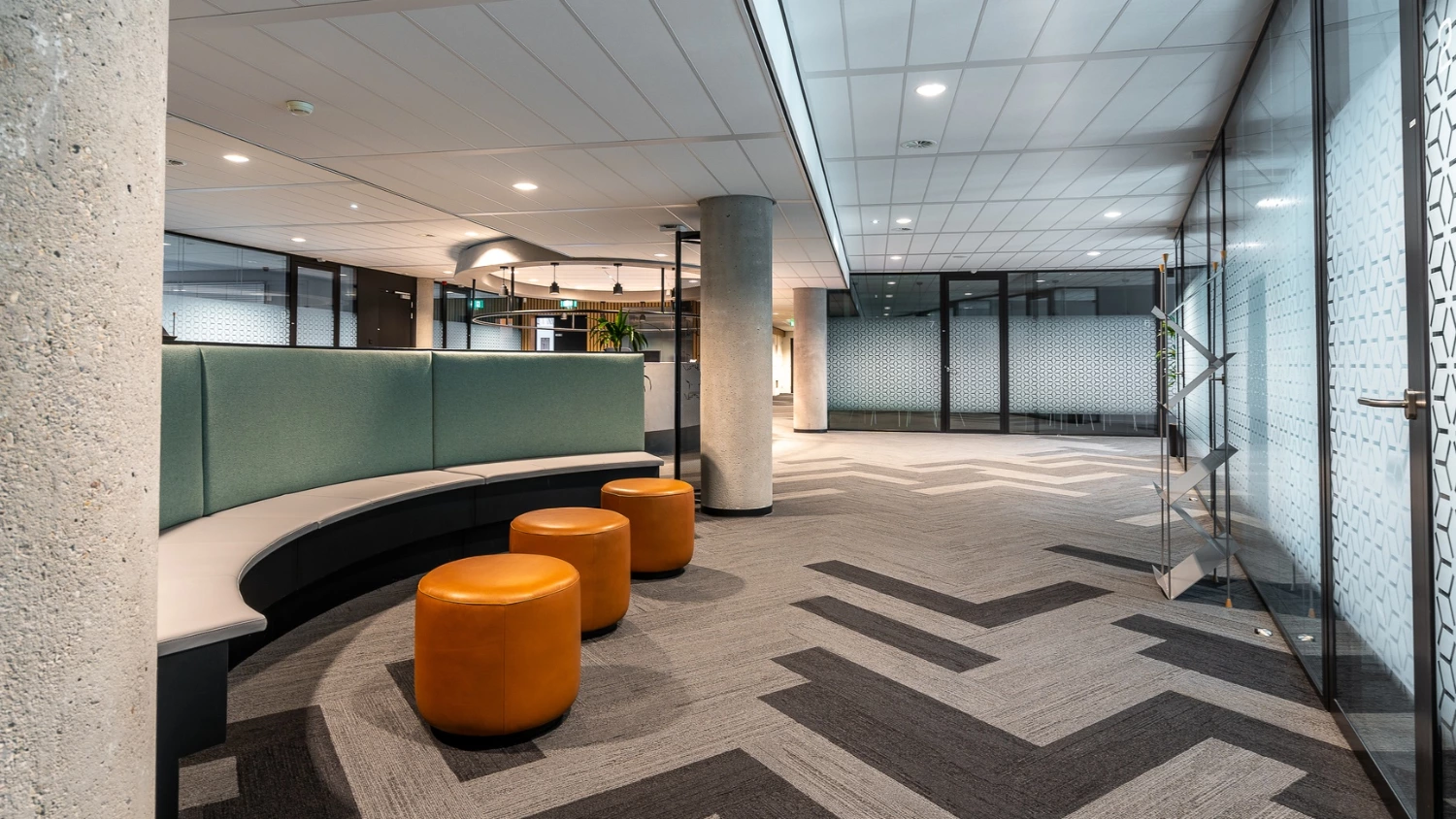
The average total office fit-out costs in Bucharest increased slightly in 2025 to around €1,000 per sqm, according to data from Cushman & Wakefield Echinox. However, Bucharest remains one of the most affordable markets in CEE, with fit-out costs 18% and 15% lower than in Warsaw and Prague, respectively.
The European real estate industry has shifted from cautious optimism to pragmatism as geopolitical and economic uncertainty continues to temper investment activity, according to the latest report by PwC and the Urban Land Institute.
Nicolae Ciobanu, Managing Partner – Head of Advisory at Fortim Trusted Advisors, talked to Property Forum about the firm's growth in office leasing and land transactions, as well as the outlook on rents and the role of the defense sector in boosting industrial demand going forward.
George Gardin, Country Manager for Romania at Yellow Tree Group, spoke with Property Forum about the group's first pilot development in Romania, Aria Shopping Center, and the investment vision for the local market going forward, with a focus on diversification into hospitality and in-city logistics.
Futureal Group's energy division has entered international markets under the newly established brand Futureal Energy Partners. The move marks a significant step in the company's strategy to broaden its presence in renewable energy investment and electricity trading across Europe.
The industrial real estate market in CEE has entered 2025 with strong momentum. According to new market data released by iO Partners, the total stock of industrial space has reached 34.4 million sqm in Q1 2025, marking a 1.1% quarter-on-quarter increase.
A major railway project in Slovenia, aimed at enhancing the capacity of Port Koper, is nearing completion amidst ongoing controversies and skyrocketing costs, according to an analysis by Dr Aleš Pustovrh, Slovenian researcher at the Eastern European Construction Forecasting Association (EECFA).
Top lenders discussed their strategies for integrating ESG considerations into financing decisions at the first CEE ESG Forum 2024, organised by Property Forum and Green Forum in Vienna last November.
Investors across Europe will continue to focus on sectors with strong structural tailwinds, such as living and logistics, according to a Knight Frank report.
Bucharest's hotel market is set to expand by around 2,400 rooms by 2026, outpacing the estimated growth from other CEE-based capital cities, according to a Cushman & Wakefield report.
Romania's commercial property sector recorded investment transactions of €418 million in H1 2024, up 131% year-on-year, marking the biggest volume growth across CEE, according to Cushman & Wakefield Echinox.
The concentration of population in rural areas, lower construction standards and less service-driven economy contribute to the divergence between the CEE region and Western European states when it comes to energy consumption structure, reveals Colliers in its recent report.
The European Bank for Reconstruction and Development is providing €35 million to GreenWay as part of a €113 million financing package to expand electric vehicle charging infrastructure across Central Europe.
The newly published Edition 2 2026 of the PV Module Manufacturer Ranking Report shows the first signs of stabilisation in the solar manufacturing sector's balance sheets after more than a year of steady deterioration. The table tracks the Altman Z-Score, a widely used measure of bankruptcy risk, for 64 publicly listed photovoltaic module manufacturers, and has now been refreshed with first-quarter 2026 data.
The Faculty of Hydrotechnics from the Technical University of Civil Engineering Bucharest and Waldevar Floating PV have signed a strategic partnership to accelerate innovation in renewable energy and prepare the next generation of specialists in floating photovoltaic technologies.
Rezolv Energy has commissioned the St. George solar park in Silistra, Bulgaria, marking the company's first project to become operational. The 225 MW facility reached full operational status in under three years from acquisition of development rights.