
New sustainable modern railway inaugurated in Czech Republic

Alina Oprea
The renovated railway service in South Moravia, one of the biggest Cohesion Policy investments in the Czech Republic, was inaugurated and opened to passengers. The renovation of this line, involving - 37 new electric units - will contribute to the de-congestion of traffic during peak hours in the busy South-Moravian railway, which transports approximately 22 million passengers every year. This project was approved in December 2019 and benefitted from €223 million of Cohesion Policy funding from the 2014-2020 programming period, out of a total budget of €265 million. The reinforced railway system offers new modern rolling stock covering services on the two busiest regional rail lines around the regional capital Brno.

The new electric and energy-efficient trains, counting for more than 10,000 seats, replace obsolete and old vehicles, offering passengers safer, faster, and more comfortable journeys. It is expected that more people will feel motivated to take the train.

Each unit is named after a variety of wines typical for the South Moravian region.

A modern European ETCS train security system is installed, and the train will reach speeds of up to 160 km/h.

”The new railway units will provide efficient rail services and contribute to making the European Green Deal a reality. I am happy that this project is being inaugurated today and will now concretely improve the life of Czech citizens in South Moravia”, says Elisa Ferreira, Commissioner for Cohesion and Reforms.

In 2014-2020, Czechia benefited from Cohesion Policy funding worth €25.7 billion. The renovation of the railway has been financed by the Transport Operational Programme, which is funded by the Cohesion Fund (€3.5 billion) and the European Regional Development Fund envelope (€900 million).

For the 2021-2027 programming period €21 billion of Cohesion Policy funding has been made available to Czechia to implement joint EU priorities such as a balanced territorial development and a fair climate and digital transition, whilst supporting an innovative and inclusive social market economy.

Cohesion Policy will also continue supporting sustainable and smart mobility development in Czechia.

The new Transport program will improve the transport infrastructure in Czechia, including sustainable and safer mobility in Czech cities with a budget of more than €4.8 billion. Under this program, the Cohesion Fund will make €800 million available for sustainable urban mobility. This will also include building or renovating tram and trolleybus lines in main Czech agglomerations.

RECOMMENDED
Crestyl secures €185 million loan for Prague office park from pbb & Helaba
Real estate

Crestyl secures €185 million loan for Prague office park from pbb & Helaba

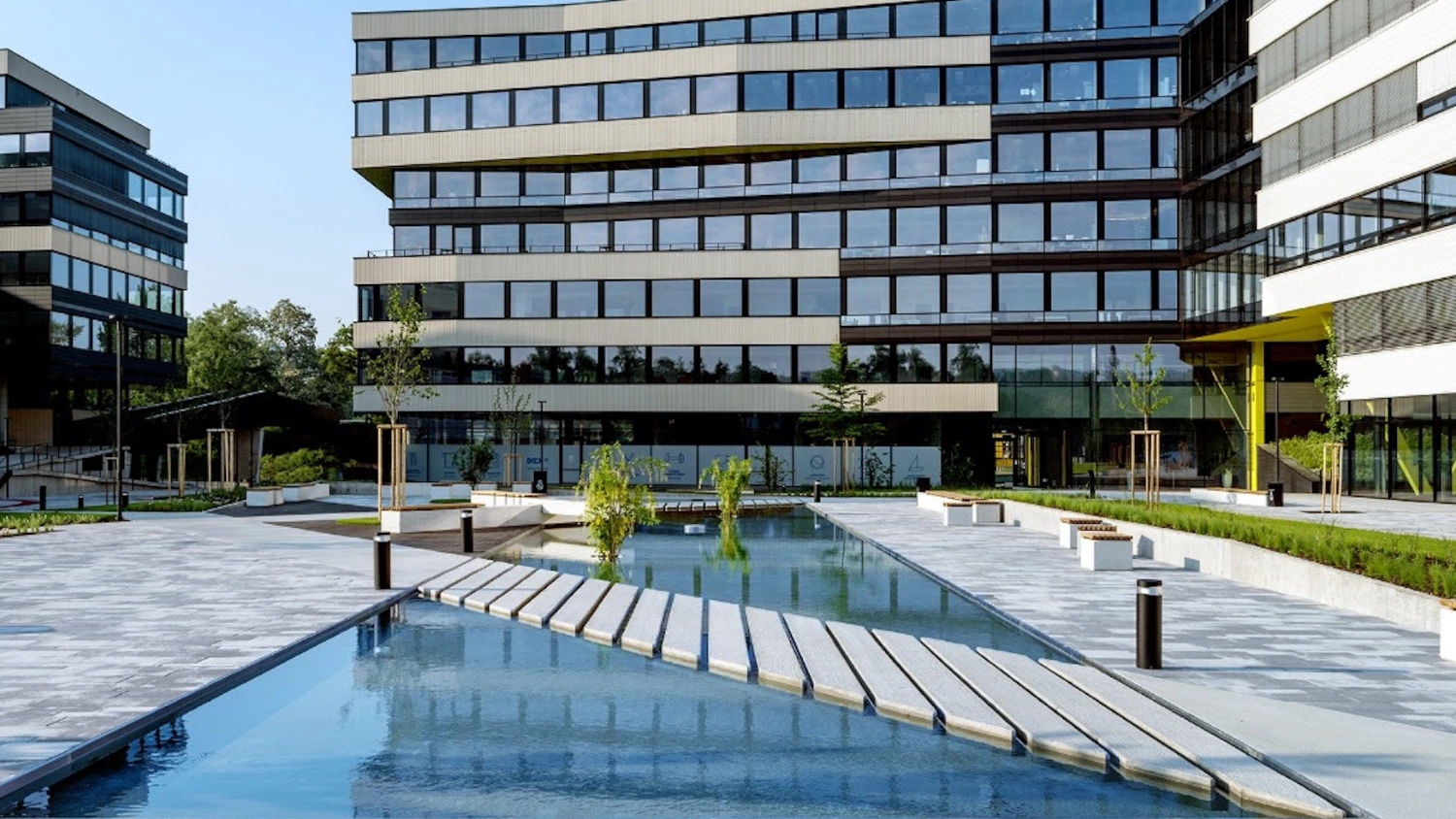
Crestyl Group has secured a €185 million medium-term refinancing package for its Dock In Office Park in Prague, jointly underwritten by Deutsche Pfandbriefbank (pbb) and Helaba. The transaction capitalises on the lenders' long-term involvement with the Prague 8 commercial development. Prior to this agreement, both pbb and Helaba successfully provided the financing for all five individual phases of the waterfront office park.

Three Prague office buildings earn Breeam sustainability ratings
Real estate

Three Prague office buildings earn Breeam sustainability ratings

Office buildings Anděl 17, Panorama Business Center and Victoria Vyšehrad from Českomoravská Nemovitostní's managed portfolio have obtained Breeam International In-Use certification, confirming high levels of sustainability and energy efficiency.

Reckitt signs major lease at Garbe Park Klášterec nad Ohří
Real estate

Reckitt signs major lease at Garbe Park Klášterec nad Ohří

Garbe has started construction of a new 55,000 sqm hall at Garbe Park Klášterec nad Ohří II, with global consumer goods company Reckitt becoming the anchor tenant. The British multinational has leased 35,000 sqm of industrial space under a ten-year agreement and will move in during the Q2 2026.

New energy certificates directive shifts from recommendations to sanctions
Real estate

New energy certificates directive shifts from recommendations to sanctions

Only 14% of office buildings across the Prague market have achieved an Energy Performance Certificate in class A or B, with older properties having a higher probability of being classified in lower energy performance classes. An internal Savills survey, covering dozens of properties, has revealed that a significant proportion of Prague's office stock is facing the need for modernisation. 

RECOMMENDED FROM THE HOME PAGE
Energy

Rezolv Energy launches Bulgaria's St. George solar park

Rezolv Energy has commissioned the St. George solar park in Silistra, Bulgaria, marking the company's first project to become operational. The 225 MW facility reached full operational status in under three years from acquisition of development rights.

Real estate

Data and energy performance are redefining real estate value

In a video interview recorded at Bratislava Property Forum 2026, Hubert Abt FRICS, CEO of workcloud24, explains why energy performance is emerging as the most important operational metric, how investors are approaching sustainability and what it takes to create real value through data-driven asset management.

Finance

ProCredit Bank Romania launches CO2 calculator for SMEs

ProCredit Bank Romania has launched a CO2 Emissions Calculator to help microenterprises and small and medium-sized enterprises quantify and understand their carbon footprint. This initiative reflects the Procredit Group's commitment to achieve net-zero emissions by 2050, with client engagement at the core of its Climate Action Strategy.