Central and Eastern Europe leads Europe in rapid solar power growth

Green Forum
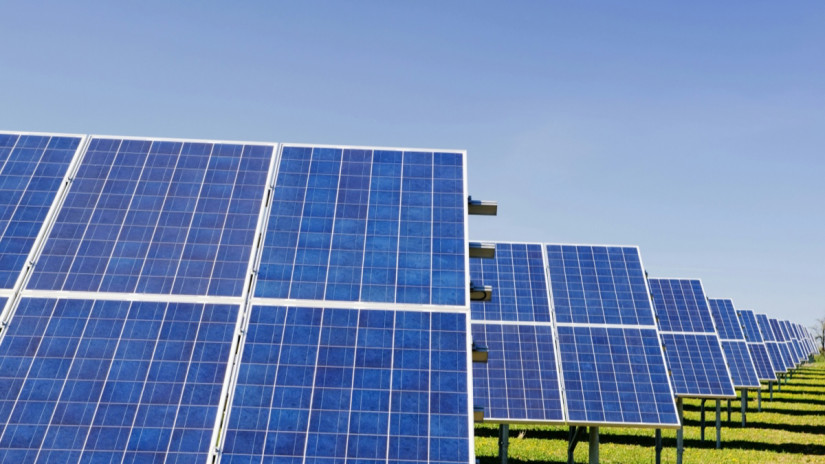
Solar power generation is increasing more rapidly in Central and Eastern Europe than in any other region on the continent, outpacing the growth seen in wealthier and sunnier areas, according to data from Ember.

During the first seven months of 2024, utility-scale solar output in the five largest solar-producing countries in Central/Eastern Europe—Austria, Bulgaria, Hungary, Romania, and Poland—rose by 55% compared to the same period in 2023.

This growth rate is more than double the average for Europe and significantly surpasses the increases recorded by the top solar producers in Western, Southern, and Northern Europe over the same timeframe.

Since 2019, these top five Central and Eastern European countries have also led the way in expanding solar generation capacity, positioning the region for continued growth in one of Europe's most industrialized areas.

Poland and Hungary are the primary drivers of this utility-scale solar expansion. In the first seven months of 2024, Poland generated 11.3 terawatt-hours (TWh) of solar-powered electricity, while Hungary produced 5.8 TWh. These figures represent year-on-year increases of 33.3% and 47.7%, respectively, making them among the fastest-growing in Europe.

In absolute terms, the solar output of these five Central and Eastern European countries is also impressive. Collectively, they have generated just 10% less solar electricity this year than the top five solar producers in Western Europe—Belgium, France, Germany, the Netherlands, and Switzerland.

This achievement highlights how competitive solar energy has become in Central and Eastern Europe, enabling these nations to keep pace with wealthier Western European economies.

RECOMMENDED
RECOMMENDED FROM THE HOME PAGE
Energy

Waldevar Energy builds utility-scale PV parks in Romania

Waldevar Energy has begun construction on two utility-scale photovoltaic parks for Doral Energy in Tudor Vladimirescu (Brăila County) and Ștefan Vodă (Călărași County), Romania. The projects will deliver 14 MWp of installed capacity using around 25,000 photovoltaic panels.

Industry

Lidl Romania exceeds 2030 sustainability targets early

Lidl Romania has published its eighth sustainability report for the 2024 financial year, announcing accelerated progress in reducing environmental impact. The retailer has achieved its international 2030 target for transitioning to natural refrigerants, with these now used in 100% of logistics centres and 81.7% of stores, compared to the original goal of 100% of logistics centres and 40% of stores. The company has also increased its green energy usage to 80% of total consumption.

Energy

Dentons advises OX2 on 235 MW Romanian wind acquisition

Global law firm Dentons has advised OX2 on acquiring three wind power projects totaling 235 MW in Romania from Future Power. The projects, located in Vaslui and Vrancea counties, are expected to be commissioned between 2028 and 2030, subject to permitting.

Energy

Turkish investors pour millions into Romanian green energy

Romania is emerging as a key destination for Turkish renewable energy investments, attracting growing interest from industrial and financial groups. Real grid connection opportunities for projects, infrastructure modernisation potential, and investment framework stability make Romania strategic for Turkish capital as Europe accelerates its transition to sustainable sources and energy independence.

READ MORE
Green Forum  |  17 December, 2025 at 8:49 AM
Green Forum  |  11 December, 2025 at 11:36 AM