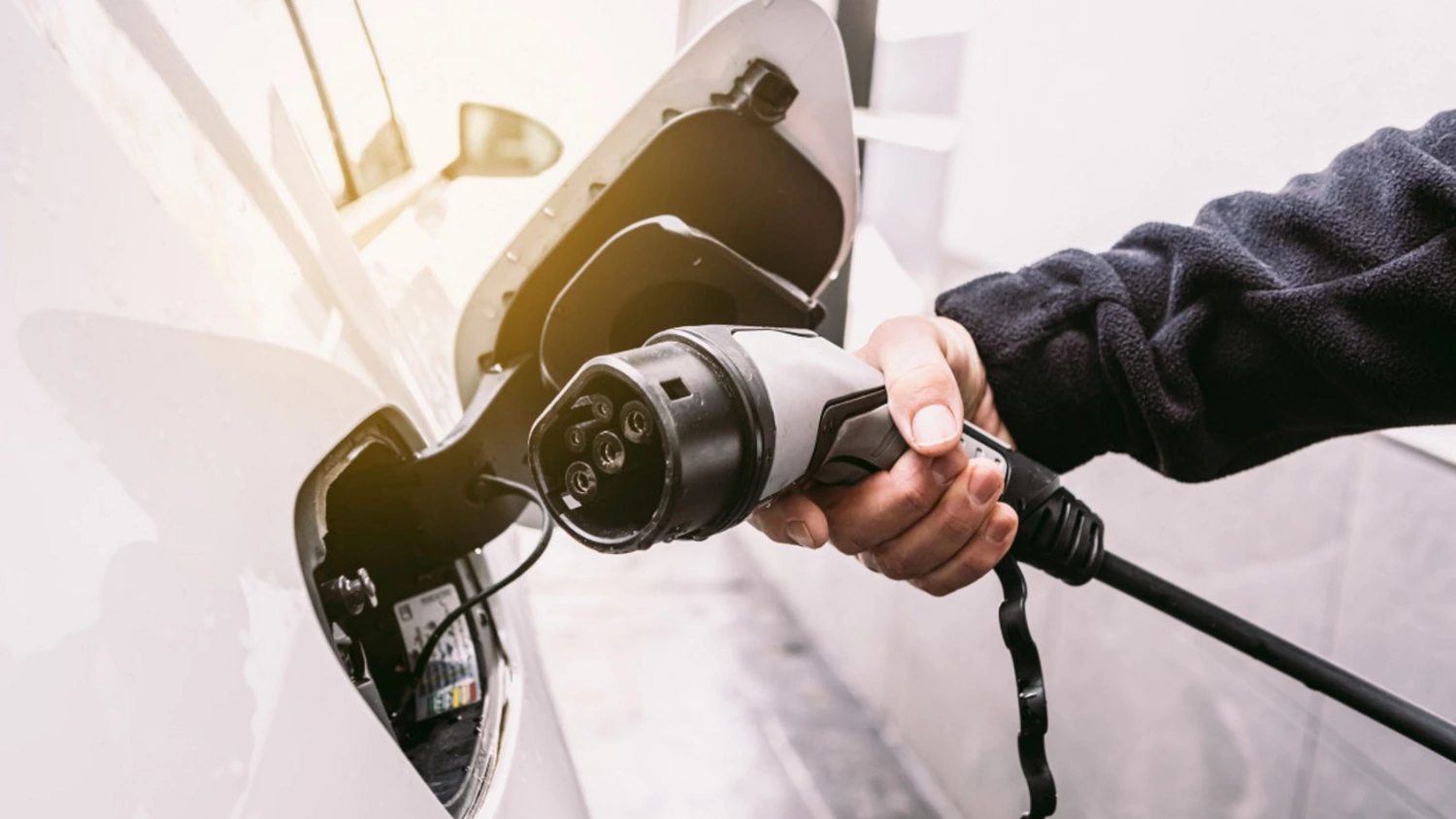
Europe needs €39 billion a year for green transport

Green Forum
Europe needs to spend €39 billion in public money every year to maintain the continent's competitiveness and ensure that green transport tech is made in Europe, a new Transport & Environment (T&E) study shows. 

T&E also calls for switching from spending on traditional infrastructure like roads and airports to new energy infrastructure like grids and charging, which are key to decarbonizing road transport.

Public support for EV social leasing, green fuels, battery manufacturing, and charging infrastructure would help to unleash seven times that (€271 billion) every year in private spending on green tech in Europe up to 2030, the study finds. Total private and public investment rises to €507 billion a year by 2040, as the shift to green transport technology gathers pace.

The bulk of the investment (87%) in green transport technology manufacturing will come from private investors, including manufacturers and banks. But the most capital-intensive industries and energy infrastructure will need public support. T&E puts this number at €39 billion a year for manufacturing until 2030, which is less than the €42 billion that European governments give away in subsidies for petrol and diesel company cars every year.

T&E calls, among other things, for a €25 billion-backed EU battery fund to support European battery manufacturing, which is under intense pressure from China. This would provide public funding for scaling local battery production, accessing key materials, and de-risking investments in key components such as cathodes.

Similarly, e-fuels for planes and ships are currently expensive and are still in the early stages of their development. Investors are therefore reluctant to take risks and Europe is way short of the total €86 billion in capital investments needed by 2030 to kickstart their production across Europe. T&E calls on governments to deliver a third of this funding via guarantees and loans to de-risk private investments in clean fuel production.

Large public investments in particular are also needed to modernise Europe's energy infrastructure to ensure grids can meet the additional demand from millions of electric-powered vehicles. T&E calls on governments to double their current investments in grids to reach €67 billion a year until 2050. This can be offset by limiting the €61 billion that European governments spend on road building, which, if halved, would be enough to match the additional needs for grids.

RECOMMENDED
EIB and EU finance greener transport in France
Mobility

EIB and EU finance greener transport in France

The Lille Metropolitan area (Métropole européenne de Lille) has been awarded a green loan of €245 million by the European Investment Bank (EIB) to fund its public transport network and cycling paths.

RECOMMENDED FROM THE HOME PAGE
Microsoft hits 100% renewable energy target five years early
Energy

Microsoft hits 100% renewable energy target five years early

Microsoft has achieved its goal of matching 100% of its annual global electricity consumption with renewable energy, reaching the milestone five years ahead of its 2025 target. The achievement supports the company's commitment to become carbon negative by 2030.

Real estate

How is EU real estate navigating the CSRD changes? Take our survey

The recent weakening of the CSRD may have some real estate developers cheering the compliance rollbacks, but the consequences could be complicated. A new research survey examines how EU real estate firms are navigating changes to the CSRD, and what that could mean for upcoming SFDR revisions.

Energy

Waldevar Energy builds utility-scale PV parks in Romania

Waldevar Energy has begun construction on two utility-scale photovoltaic parks for Doral Energy in Tudor Vladimirescu (Brăila County) and Ștefan Vodă (Călărași County), Romania. The projects will deliver 14 MWp of installed capacity using around 25,000 photovoltaic panels.

Industry

Lidl Romania exceeds 2030 sustainability targets early

Lidl Romania has published its eighth sustainability report for the 2024 financial year, announcing accelerated progress in reducing environmental impact. The retailer has achieved its international 2030 target for transitioning to natural refrigerants, with these now used in 100% of logistics centres and 81.7% of stores, compared to the original goal of 100% of logistics centres and 40% of stores. The company has also increased its green energy usage to 80% of total consumption.

READ MORE
Green Forum  |  19 February, 2026 at 10:24 AM
Green Forum  |  5 February, 2026 at 11:47 PM