EU approves €2.6 billion Estonian aid for offshore wind energy

Green Forum
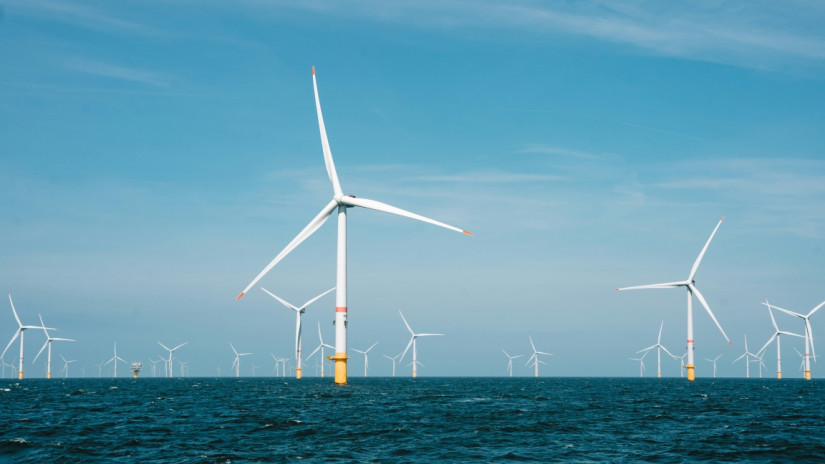
The European Commission has approved a €2.6 billion Estonian scheme to support renewable offshore wind energy to foster the transition towards a net-zero economy. 

The scheme was approved under the State aid Temporary Crisis and Transition Framework (‘TCTF') adopted by the Commission on 9 March 2023 and amended on 20 November 2023 and on 2 May 2024.

Estonia notified to the Commission, under the TCTF, a €2.6 billion scheme to support renewable offshore wind energy to foster the transition towards a net-zero economy.

The measure will support the construction and operation of offshore wind farms for electricity production in the areas determined by the Estonian Maritime Spatial Plan.

The aid will be granted on the basis of a transparent and non-discriminatory bidding process. The aid will take the form of a variable payment under two-way contracts for difference (“CfD”) concluded for a period of 20 years. The aid amount will be calculated by comparing a strike price, determined in the tender offer of the selected beneficiary, to the market price for electricity. When the strike price exceeds the reference market price, the difference (price premium) is paid by the Estonian State to the beneficiary on top of the market price, with a maximum amount of aid granted capped at 65 €/MWh. Conversely, when the reference market price exceeds the strike price, the beneficiary will have to pay the difference to the Estonian authorities. There will be a limitation on the annual volume supported for a given year (set at a maximum of 2 TWh/year).

The Commission found that the Estonian scheme is in line with the conditions set out in the TCTF. In particular, the aid (i) will be granted through an open, clear, transparent and non-discriminatory competitive bidding process; and (ii) will be granted before 31 December 2025.

The Commission concluded that the Estonian scheme is necessary, appropriate and proportionate to accelerate the green transition and facilitate the development of certain economic activities, which are of importance for the implementation of the REPower EU Plan and the Green Deal Industrial Plan, in line with Article 107(3)(c) Treaty on the Functioning of the European Union and the conditions set out in the TCTF.

On this basis, the Commission approved the aid measure under EU State aid rules.

RECOMMENDED
EU allocates €4.8 billion to net-zero innovation
Environment

EU allocates €4.8 billion to net-zero innovation

The European Commission has selected 85 innovative net-zero projects to receive €4.8 billion in grants from the Innovation Fund, helping to put cutting-edge clean technologies into action across Europe.

EIB and EU finance greener transport in France
Mobility

EIB and EU finance greener transport in France

The Lille Metropolitan area (Métropole européenne de Lille) has been awarded a green loan of €245 million by the European Investment Bank (EIB) to fund its public transport network and cycling paths.

RECOMMENDED FROM THE HOME PAGE
Industry

Lidl Romania exceeds 2030 sustainability targets early

Lidl Romania has published its eighth sustainability report for the 2024 financial year, announcing accelerated progress in reducing environmental impact. The retailer has achieved its international 2030 target for transitioning to natural refrigerants, with these now used in 100% of logistics centres and 81.7% of stores, compared to the original goal of 100% of logistics centres and 40% of stores. The company has also increased its green energy usage to 80% of total consumption.

Energy

Dentons advises OX2 on 235 MW Romanian wind acquisition

Global law firm Dentons has advised OX2 on acquiring three wind power projects totaling 235 MW in Romania from Future Power. The projects, located in Vaslui and Vrancea counties, are expected to be commissioned between 2028 and 2030, subject to permitting.

Energy

Turkish investors pour millions into Romanian green energy

Romania is emerging as a key destination for Turkish renewable energy investments, attracting growing interest from industrial and financial groups. Real grid connection opportunities for projects, infrastructure modernisation potential, and investment framework stability make Romania strategic for Turkish capital as Europe accelerates its transition to sustainable sources and energy independence.

Business

Cost remains main driver and biggest barrier in sustainability

51% of Romanian entrepreneurs see sustainability as a way to reduce operational costs, yet the same proportion say implementation is too expensive, according to a new study by BRD Groupe Société Générale. Conducted among micro and small-to-medium enterprises, the research outlines how Romanian entrepreneurs perceive the opportunities and challenges of transitioning to sustainable business models.

READ MORE
Green Forum  |  11 December, 2025 at 11:36 AM